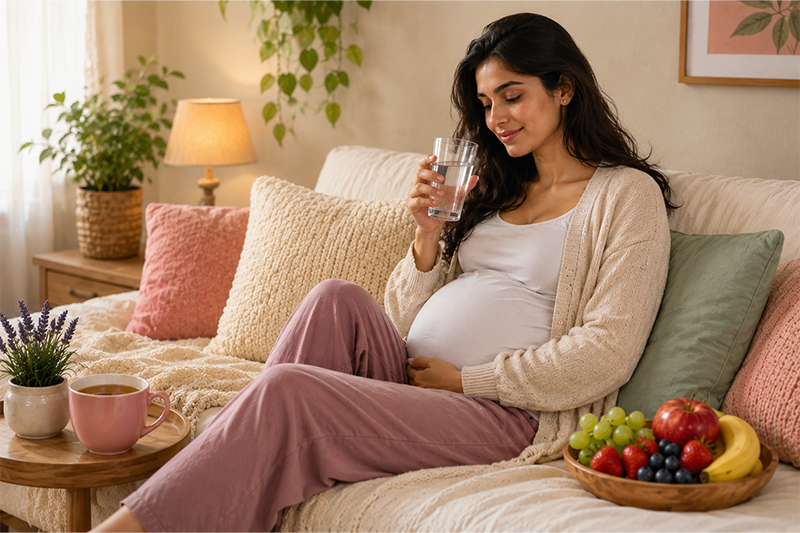
Hemorrhoids during pregnancy, commonly called “piles” in India, are swollen veins in or around the rectal area. According to NCBI, they are common in pregnancy, affecting about 25% to 35% of pregnant women, and are seen more often in the మూడవ త్రైమాసికం and after delivery. They can happen due to pressure from the growing uterus on rectal veins, constipation, straining during bowel movements, and pregnancy-related hormonal changes that relax blood vessel walls. Most cases improve after delivery. Safe relief measures include warm sitz baths, increasing fibre and fluid intake, avoiding straining, and using witch hazel pads if advised by a healthcare provider.
What are hemorrhoids during pregnancy?
Hemorrhoids are swollen and irritated veins in the anal or rectal area (the area around the opening where stool leaves the body). During pregnancy, these veins experience increased pressure as the uterus grows and blood flow increases in the pelvic region(the lower belly area between the hip bones).
Constipation(difficulty passing stool or infrequent bowel movements), which is also common during pregnancy, can make piles worse because straining puts more pressure on the rectal veins. Pregnancy hormones also relax blood vessel walls, making the veins more likely to swell. Although they feel uncomfortable, pregnancy-related piles usually improve after delivery with supportive care.
What do hemorrhoids feel like in pregnancy?
You might notice a dull ache, burning, or intense itching around your anal area. For many women, the first sign is a streak of bright red blood on the toilet paper after passing stool.
Internal vs external hemorrhoids during pregnancy: What’s the difference?
The main difference is location. Internal hemorrhoids stay hidden inside the rectum and rarely hurt. External hemorrhoids form under the skin around the opening of the anus, creating a painful, visible lump.
Table 1: Internal vs. external hemorrhoids in pregnancy
| ప్రత్యేకత | Internal hemorrhoids | External hemorrhoids |
| స్థానం | Inside the rectum – not visible | Outside the anus – visible/palpable |
| నొప్పి | Usually painless | Painful, especially when sitting or walking |
| రక్తస్రావం | Bright red blood during bowel movement | May bleed but less commonly |
| Itching | Mild, internal irritation | Significant itching around the anus |
| Safe home treatment | High fibre, sitz bath, hydration | Sitz bath, cold compress, safe topical cream |
Why do piles occur during pregnancy? Pathophysiology explained
The underlying pathophysiology of hemorrhoids involves a mix of pressure and hormones. Your growing uterus presses hard on the pelvic veins. This pressure slows down blood flow from the lower half of your body. At the same time, pregnancy hormones relax the walls of your blood vessels, making them swell easily.
1st stage of piles: Recognising early hemorrhoids in pregnancy
The 1st stage of pile formation begins with mild internal swelling. You will not see any lumps outside your body yet. The only sign might be occasional, painless bleeding or a feeling of fullness when you use the bathroom.
Piles in females during pregnancy: What to look for
If you look at medical visual guides, you will see that external hemorrhoids appear as small, soft, bluish-purple bumps near the anus. These lumps can get larger and firmer if a small blood clot forms inside them.
Can pregnancy constipation cause hemorrhoids?

Yes, constipation during pregnancy is the number one cause of piles. When you strain to pass hard stool, the intense pressure forces the rectal veins to balloon upward.
Constipation in pregnancy: Why it’s so common
Medical data shows that constipation during pregnancy affects about 11% to 38% of women. High progesterone levels relax the smooth muscles of the digestive tract, slowing bowel movement. This allows more water to be absorbed from the stool, making it harder, drier, and more difficult to pass.
When does constipation in pregnancy start?
Many women ask: When does constipation in pregnancy start? It can actually begin as early as the first trimester. Your hormone levels change rapidly right after conception, slowing down your gut before your belly even grows.
Is constipation a symptom of early pregnancy?
Yes, constipation during early pregnancy is a classic early sign. Your body is adjusting to sudden hormonal shifts, and your prenatal iron supplements can make your stool even firmer.
Can straining cause a miscarriage? What the evidence shows
This is a high-anxiety query for many mothers. The evidence shows that straining to pass a stool does not cause a miscarriage. Your baby is safely cushioned inside the amniotic sac. However, excessive straining will definitely worsen hemorrhoids and cause an anal fissure during pregnancy.
What is the fastest way to relieve constipation during pregnancy?
The fastest way to get relief is to alter your bathroom posture and change your morning hydration habits immediately.
How to relieve constipation in 30 minutes?
Drinking two large glasses of warm water right after you wake up can stimulate your bowels to move within 30 minutes. Walking briskly around your home for 15 minutes also wakes up a lazy digestive tract.
Remedies for constipation during pregnancy
- Sat isabgol: Mix 1 tablespoon of psyllium husk in warm water or milk at bedtime to soften hard stool.
- Soaked anjeer: Eat 2 soaked figs every morning to boost your daily dietary fibre.
- Warm water habits: Drink warm water throughout the day to keep your digestive tract moving smoothly.
Can hot water reduce constipation during pregnancy?
Yes, drinking warm or hot water relaxes your intestinal muscles. It helps break down food particles quickly, making it a highly reliable remedy for constipation during pregnancy.
How can I push my hard stool out during pregnancy safely?
Never hold your breath or force the stool out with a strained push. Exhale slowly as you go, and let your stomach muscles do the gentle work rather than forcing your pelvic floor.
Squatty potty for pregnancy constipation: Why it works
Using a small stool to raise your knees simulates the natural squatting posture of a traditional Indian toilet. This angle straightens the rectum, allowing stool to slide out without any painful friction.
How to deal with constipation during pregnancy: Daily management plan
Create a fixed routine: wake up, drink warm water, use a footstool in the restroom, and eat high-fibre meals at the same time every day to train your gut.
Table 2: Fastest constipation relief during pregnancy
| Remedy | Works in | Specific tip |
| Warm water (2 glasses on waking) | 20–30 min | Common morning habit – highly effective |
| Isabgol (Psyllium husk) | 6–12 hours | 1 tbsp in warm water at night – widely used |
| High-fibre foods | Same day | Eat anjeer(Fig), dal, spinach, and seasonal fruits |
| Indian squat toilet posture | Immediate | Naturally aligns the bowel for easier passage |
| Sitz bath (warm) | 5–10 min | Reduces hemorrhoid pain and relaxes the bowel |
How to get rid of hemorrhoids during pregnancy at home

You can easily treat piles in pregnancy using simple, everyday items available in an Indian household.
How to treat piles during pregnancy: Step-by-step home guide
- Step 1: Take a warm sitz bath. Fill a shallow tub with warm water and sit in it for 10 minutes, two to three times a day.
- Step 2: Apply pure coconut oil. Dab a small amount of extra virgin coconut oil onto external lumps to soothe itching.
- Step 3: Avoid dry wiping. Use a soft jet spray or wet wipes instead of dry toilet paper to prevent bleeding.
- Step 4: Rest on your side. Avoid sitting or standing for long hours; sleep on your left side to take pressure off your pelvic veins.
How to treat hemorrhoids during pregnancy: Safe remedies
Applying ice packs wrapped in a clean cotton cloth helps numb sharp pain and reduces swelling within minutes.
Indian home remedies for piles in pregnancy
In traditional Indian care, focuses on keeping the body cool. Drinking fresh buttermilk mixed with a pinch of rock salt helps soothe the gut. Avoid eating red chillies, fried snacks, and heavy spices, as these can cause a severe burning sensation during bowel movements.
How to poop with hemorrhoids while pregnant
Sit comfortably on the toilet with your feet raised on a footstool. Lean forward, relax your jaw, breathe out gently, and do not spend more than 5 minutes on the toilet seat.
What to eat for piles during pregnancy: Fibre-rich foods to include
Wondering what to eat in piles? Your plate should feature whole grains like oats, broken wheat daliya, green leafy vegetables (palak), lentils, and whole wheat rotis instead of maida.
Very painful hemorrhoids during pregnancy: What to do
If your piles become extremely painful, you need to know what symptoms require medical evaluation.
External hemorrhoids during pregnancy: symptoms and treatment
An external hemorrhoid can sometimes become a thrombosed hemorrhoid, meaning a small clot has formed inside the lump. This causes a sudden, severe, throbbing pain that makes walking difficult. Doctors treat this safely with prescription soothing ointments.
Table 3: Hemorrhoid treatment safety guide
| Treatment | For what type | India availability | Safe in pregnancy? |
| Warm sitz bath | All hemorrhoids | Easily done at home | Yes – First-line treatment |
| Witch hazel pads | External hemorrhoids | Online / larger pharmacies | అవును |
| Coconut oil (Topical) | External itching | Widely available | Yes – Great home remedy |
| Fibre supplement (Isabgol) | Constipation + piles | Sold as “Sat Isabgol” | Yes – Safe and recommended |
| Rubber band ligation | Severe internal | Surgical / gastro clinics | Post-delivery is preferred |
Blood in stool during pregnancy: When is it hemorrhoids vs something serious?
Seeing bright red blood on your tissue paper or in the pan is usually a sign of piles or a fissure in pregnancy. However, if you see dark, tarry blood mixed into your stool, or if you feel severe abdominal pain, contact your doctor immediately to rule out other digestive issues.
Anal fissure during pregnancy vs hemorrhoid: How to tell them apart
While hemorrhoids feel like dull, swollen lumps, a fissure in pregnancy is a tiny tear in the skin lining. Fissures cause a sharp, paper-cut-like pain during bowel movements that can burn for hours afterwards.
How long do hemorrhoids last in pregnancy?
The duration of your symptoms depends entirely on your daily digestive health and postpartum recovery.
Can hemorrhoids go away during pregnancy on their own
Hemorrhoids rarely disappear completely while you are still pregnant because the baby is constantly growing. However, proper home care can make them completely painless and shrink the swelling significantly.
Piles after delivery: What happens postpartum
Many women develop piles after delivery due to the intense pushing during a vaginal birth. The good news is that once the pelvic pressure drops, these veins naturally shrink and disappear within a few weeks.
Can I give birth naturally with hemorrhoids?
Yes, you can give birth naturally even if you have piles. Your delivery team knows how to support your perineum during labour, and having hemorrhoids is not a medical reason for a C-section.
How to prevent hemorrhoids during pregnancy
The secret to avoiding piles is learning how to prevent constipation during pregnancy through consistent daily habits.
How to prevent constipation during pregnancy: Daily habits that help
- Drink 3 litres of water: Keep a water bottle with you and sip from it all day long.
- Walk daily: A simple 20-minute post-meal walk keeps your intestinal muscles active.
- Never ignore the urge: Go to the bathroom as soon as you feel the need; delaying it makes the stool harder.
How to get pregnant fast naturally while protecting digestive health
If you are planning a pregnancy and want to know how to get pregnant fast naturally, start building your digestive health now. Increasing your fibre intake and drinking plenty of water before conception ensures your body handles the upcoming hormonal shifts smoothly.
How Premom helps you track postpartum digestive recovery
Your body undergoes immense changes during the postpartum period, and your digestive system needs time to regulate. Tracking your recovery timeline can bring peace of mind during this transition.
By logging your daily comfort levels, bowel habits, and symptoms in the Premom app, you can monitor exactly how your body heals week by week. When your menstrual cycles eventually return, Premom’s advanced tracking features continue to map your hormonal wellness, helping you see the clear link between your hormones and your digestive health.
డౌన్లోడ్ చేయండి ప్రేమోమ్ యాప్ today to track your health trends and support your postpartum recovery journey.
ముఖ్యమైన అంశాలు
- Hemorrhoids (piles) affect up to 25% to 35% of pregnant women, most commonly in the third trimester and immediately after delivery due to pushing during labour.
- Constipation during pregnancy is the primary driver of hemorrhoids – it affects 11–38% of pregnant women and is directly preventable with diet and hydration.
- Internal hemorrhoids are typically painless with bleeding; external hemorrhoids cause visible pain, itching, and swelling outside the anus.
- Safe home remedies include warm sitz baths (5–10 min, 2–3× daily), witch hazel pads, increased fibre intake, and isabgol (psyllium husk) – particularly effective for Indian diets.
- Most pregnancy hemorrhoids resolve on their own within weeks of delivery without any medical procedure.
- Pushing while constipated does not cause miscarriage, but hard stools and excessive straining can worsen hemorrhoids significantly.
- Premom cycle tracking helps you understand your postpartum recovery timeline – including when bowel habits typically normalise after delivery.
ముఖ్య పదాలు వివరించబడ్డాయి
- Hemorrhoids (Piles): Swollen, inflamed veins around the anus or in the lower rectum that cause discomfort, pain, or bleeding.
- Pathophysiology of Hemorrhoids: The physiological changes, such as increased pelvic pressure and weak vein walls, lead to the swelling of rectal veins.
- Constipation: A digestive issue marked by infrequent bowel movements or hard stools that are difficult to pass.
- Sitz Bath: A simple home therapy where you sit in a shallow basin of warm water to soothe pelvic area pain and swelling.
- Isabgol (Psyllium Husk): A natural, plant-derived dietary fibre used widely in India to soften stool and regulate digestion.
Frequently asked questions about Hemorrhoids in pregnancy
They may not disappear fully due to constant baby weight, but their painful symptoms can go away entirely with good hydration, a high-fibre diet, and warm sitz baths.
Yes, constipation is the main cause of piles. Straining to push out hard stools creates intense pressure that makes the rectal veins swell and bleed.
Drinking two glasses of warm water right after waking up and using a footstool to lift your knees are the fastest ways to ease bowel movements safely.
Elevate your feet on a small stool, lean forward, relax your breathing, and avoid sitting on the toilet for more than five minutes at a time.
You can prevent them by avoiding constipation. Drink three litres of water daily, eat fibre-rich foods like oats and lentils, and stay active with daily walks.
They usually feel like an itchy, aching discomfort around the anus. External ones feel like small, soft lumps, while internal ones can cause painless bleeding during bowel movements.
Most pregnancy hemorrhoids shrink and resolve on their own within a few weeks after delivery, as the heavy pressure on your pelvic floor disappears.
Yes. Having piles will not stop you from having a safe vaginal delivery. Your medical team can help manage the area during and after childbirth.
No, pushing to poop does not hurt the baby because the uterus protects them completely. However, heavy straining will worsen your piles and cause tears.
Yes, warm or hot water relaxes the digestive tract and helps break down food, making it an excellent, simple home remedy for constipation.
Bright red blood on the tissue paper is common with piles and is not dangerous. However, if the blood is dark, clots are present, or your stomach hurts, call your doctor.
Premom allows you to log daily symptoms and bowel habits after delivery. This helps you monitor your healing progress and spot long-term wellness patterns.
నిరాకరణ: Premom provides educational information and tracking tools. It is not medical advice. For medical guidance, consult a healthcare professional. Premom’s Ask AI is purely informational and educational and is not a substitute for professional medical advice, diagnosis, or treatment of any kind.
ప్రస్తావనలు
- Staroselsky A, Nava-Ocampo AA, Vohra S, Koren G. Hemorrhoids in pregnancy. Can Fam Physician. 2008;54(2):189-190. https://pmc.ncbi.nlm.nih.gov/articles/PMC2278306
- Trottier M, Erebara A, Bozzo P. Treating constipation during pregnancy. Can Fam Physician. 2012;58(8):836-838. PMID: 22893333; PMCID: PMC3418980. https://pubmed.ncbi.nlm.nih.gov/22893333/
- Gomes CF, Sousa M, Lourenço I, Martins D, Torres J. Gastrointestinal diseases during pregnancy: what does the gastroenterologist need to know?. Ann Gastroenterol. 2018;31(4):385-394. doi:10.20524/aog.2018.0264 https://pmc.ncbi.nlm.nih.gov/articles/PMC6033757/