Gestational diabetes may affect about 5 to 8 million pregnant women in India each year. India’s national guideline recommends a single-step 75 g oral glucose tolerance test (OGTT), with blood sugar measured 2 hours after glucose intake. If the first test is negative, repeat testing is recommended at 24 to 28 weeks of pregnancy.
What is the glucose test during pregnancy?
A glucose test during pregnancy checks how your body handles sugar. The glucose challenge test (GCT) is a non-fasting 1-hour screen. The oral glucose tolerance test (OGTT) is a fasting diagnostic test, usually 75g in India under the DIPSI (Diabetes in Pregnancy Study Group India) protocol. GDM stands for gestational diabetes, a raised blood sugar first noticed in pregnancy.
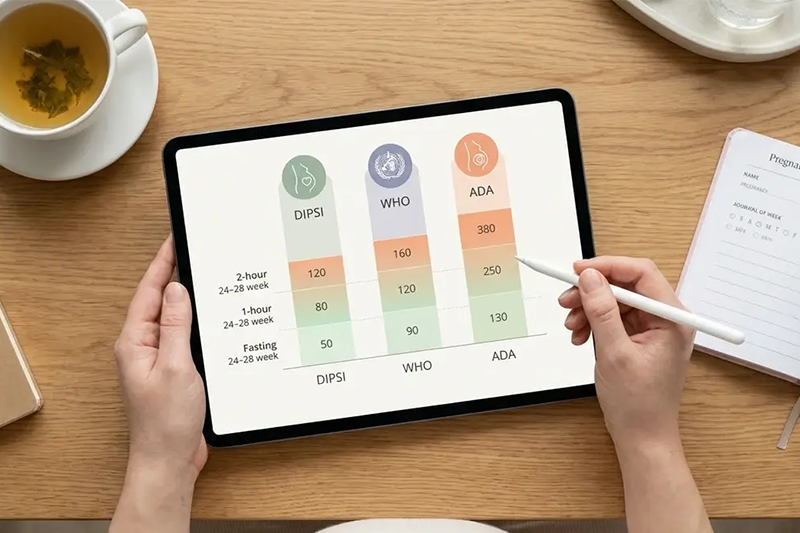
DIPSI vs WHO vs ADA cut-offs
Different protocols use different thresholds. The table below shows the most common cut-offs used in India and worldwide.
| Test | Fasting (mg/dL) | 1-hour (mg/dL) | 2-hour (mg/dL) | 3-hour (mg/dL) |
|---|---|---|---|---|
| DIPSI 75g (India) | ≥92 | not used | ≥153 | not used |
| WHO 75g | ≥92 | ≥180 | ≥153 | not used |
| ADA 75g (US) | ≥92 | ≥180 | ≥153 | not used |
| 1-hour GCT (50g) | not used | ≥140 (≥130 at some Indian centres) | not used | not used |
| ADA 100g 3-hour (US) | ≥95 | ≥180 | ≥155 | ≥140 |
How do I prepare for a glucose test during pregnancy?

Good preparation helps you get an accurate result without feeling unwell.
Step 1: Check with your doctor or lab which glucose test you are taking, because preparation can vary. In India, the common pregnancy glucose test uses 75 g of glucose dissolved in water, and it can be done whether you are fasting or non-fasting, unless your doctor gives different instructions.
Step 2: Eat your normal meals in the days before the test and do not suddenly reduce sugar or carbohydrates, as this may affect the result.
Step 3: On the test day, carry water, a small snack for after the test, and any pregnancy records your doctor asked for.
Step 4: After drinking the glucose solution, stay seated and avoid eating, drinking anything other than water, walking around too much, or vomiting, as these may affect the test. If you vomit soon after drinking it, tell the staff, because the test may need to be repeated.
Step 5: Your blood sugar will usually be checked after 2 hours for the 75 g test, so plan to spend enough time at the clinic or lab. If you feel dizzy, nauseous, sweaty, or unwell, inform the nurse or doctor immediately.
What is a normal glucose test when pregnant?
India follows the DIPSI 75g OGTT. GDM may be present if fasting is 92 mg/dL or higher, or if the 2-hour value is 153 mg/dL or higher. For the 1-hour GCT, a result of 140 mg/dL or higher (some Indian labs use 130 mg/dL) usually triggers a follow-up OGTT. For context on healthy ranges, see our overview of normal sugar levels in pregnancy.
What happens if you don’t pass your glucose test during pregnancy?
A failed 1-hour GCT is not a diagnosis. It signals that a diagnostic OGTT is needed. The table below shows what passed and failed results may look like in practice.
| Sign | Likely passed | Likely did not pass |
|---|---|---|
| Doctor follow-up | No urgent call, ‘all clear’ at next visit | The doctor calls to schedule an OGTT or refer to a diabetologist |
| 1-hour GCT value | Below 140 mg/dL | 140 mg/dL or above |
| DIPSI OGTT value | Fasting <92 and 2-hour <153 mg/dL | Fasting ≥92 or 2-hour ≥153 mg/dL |
| Symptoms after the test | Mild lightheadedness that resolves quickly | Persistent nausea, fainting, or vomiting |
| Next step | Routine prenatal care | Diet review, monitoring, and possible specialist referral |
About 15 to 25 per cent of women fail the GCT, but only 3 to 5 per cent are diagnosed with GDM after the OGTT. With a doctor-led plan, most women with GDM have healthy babies.
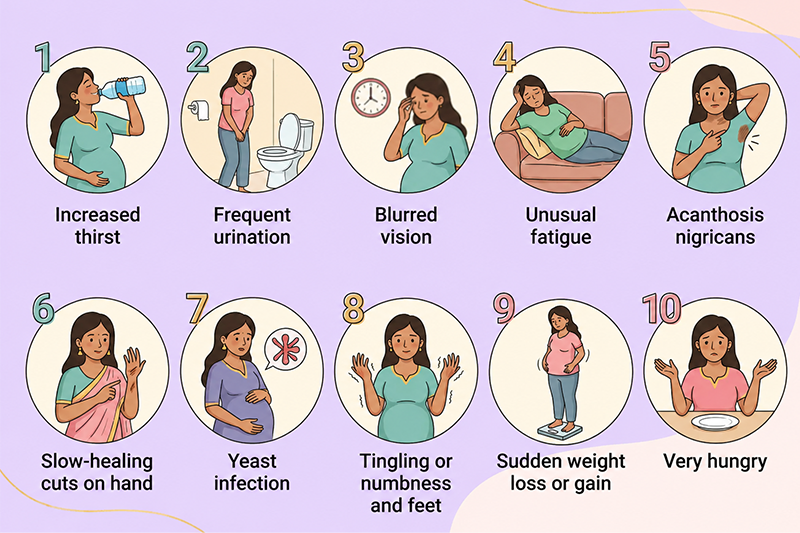
10 warning signs of gestational diabetes
Speak to your doctor if any of these signs feel new, severe, or persistent.
| Serial no | Warning sign | Why can it happen | When to call your doctor |
|---|---|---|---|
| 1 | Excessive thirst (polydipsia) | High blood sugar pulls fluid from cells | Drinking over 3 litres a day without relief |
| 2 | Frequent urination (polyuria) | Kidneys flush extra glucose | Urinating almost every hour, including at night |
| 3 | Unusual fatigue | Cells cannot use glucose well | Cannot complete normal daily activities |
| 4 | Blurred vision | Fluid shifts change the lens | Any new vision change |
| 5 | Recurrent infections (UTI, thrush, skin) | Glucose feeds bacteria and yeast | A third infection during pregnancy |
| 6 | Nausea after eating | Post-meal sugar spikes | Persistent nausea past the first trimester |
| 7 | Baby measuring large on scan | Extra glucose crosses the placenta | Scan above the 90th percentile |
| 8 | Excess amniotic fluid (polyhydramnios) | Baby urinates more when sugar is high | Sudden abdominal tightness or fluid jump |
| 9 | Slow-healing wounds | Glucose impairs immune repair | A cut that has not healed in about a week |
| 10 | Numbness or tingling in hands or feet | Nerve irritation from raised glucose | Right away, it may suggest gestational neuropathy |
Indian women face a higher GDM risk due to genetic predisposition and earlier insulin resistance.
How Premom helps you track glucose tests and prenatal visits
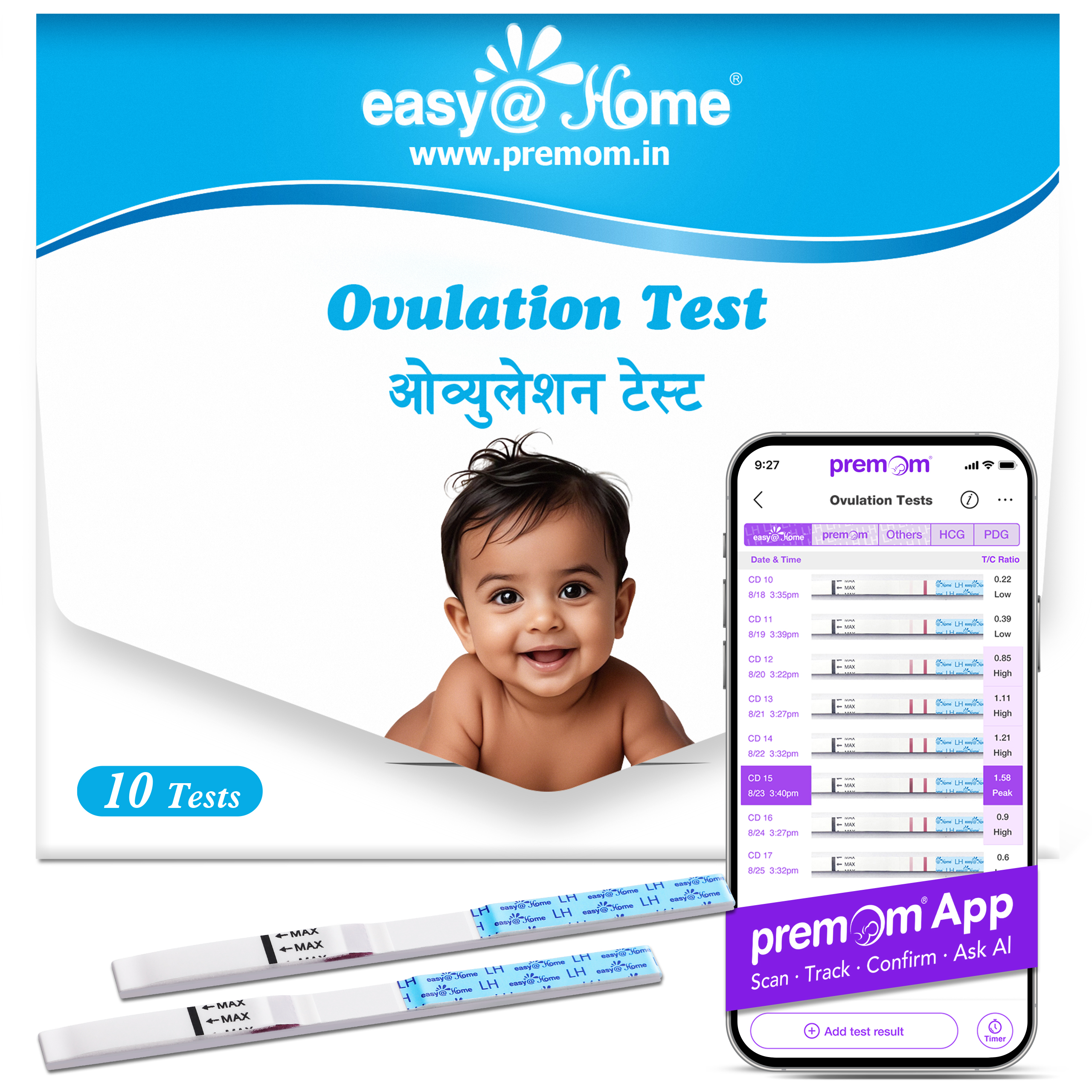
Premom is a fertility and pregnancy-tracking app where you can log GTT and OGTT dates, results, and follow-up appointments in a single personal health record. Premom and easy@Home work together as one connected fertility and pregnancy tracking system, helping you keep prenatal milestones organised so it is easier to share updates with your OB-GYN.
Track your glucose test dates, OGTT results, and prenatal appointments with Premom so your maternity health record stays in one place.
Key takeaways
- India follows the DIPSI 75g OGTT at 24 to 28 weeks of pregnancy.
- Normal DIPSI values are fasting below 92 mg/dL and 2-hour below 153 mg/dL.
- About 15 to 25 per cent of women fail the 1-hour GCT, but only 3 to 5 per cent are diagnosed with GDM.
- Common warning signs include excessive thirst, frequent urination, fatigue, blurred vision, and recurrent infections.
Frequently asked questions about the glucose test during pregnancy
Plain water before and during the test can ease nausea, but water will not change your blood sugar result. Staying hydrated may reduce dizziness and help the lab technician draw blood. Avoid juice, sugary chai, or soft drinks within 24 hours of the test.
Eat a balanced dinner, rest well the night before, and stay seated through the testing window. Tell the staff right away if you feel light-headed so they can help you lie down. Slow sips of Glucola, deep breathing, and a small sip of ginger after the final draw may ease nausea.
Mild nausea, lightheadedness, or a brief headache are common because of the concentrated sugar load. Symptoms usually settle within 30 to 60 minutes of eating. If you vomit during the test, tell your doctor. The test may need to be rescheduled to get a valid result.
You cannot game the test, but you can prepare for an accurate result. Eat balanced meals with steady carbs for 3 days, fast for 8 hours, hydrate with plain water, and rest the morning of the test. Sip the Glucola slowly. Tell staff if you feel faint or vomit.
Yes. With a doctor-led plan, most women with GDM have healthy babies. Care often includes a dietitian-guided meal plan, light activity, home glucose monitoring, and growth scans. Your doctor may recheck your blood sugar 6 to 12 weeks after delivery to confirm levels have returned to normal.
References
- Diabetes in Pregnancy Study Group India (DIPSI). Guideline on detection and management of gestational diabetes mellitus in India, 2020. https://pmc.ncbi.nlm.nih.gov/articles/PMC9638613/
- National Institute of Diabetes and Digestive and Kidney Diseases. Tests and diagnosis for gestational diabetes. https://www.niddk.nih.gov/health-information/diabetes/overview/what-is-diabetes/gestational/tests-diagnosis
- World Health Organisation. Diagnostic criteria and classification of hyperglycaemia first detected in pregnancy, 2013. https://www.who.int/publications/i/item/WHO-NMH-MND-13.2