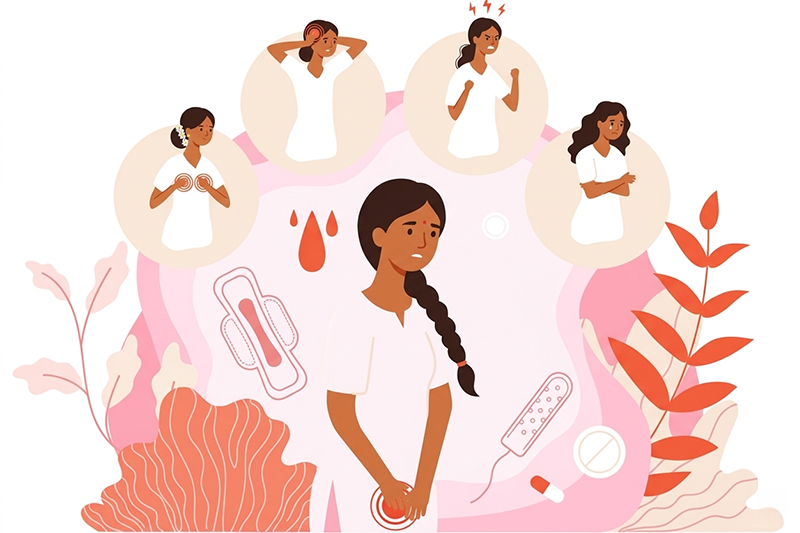
Many women notice emotional and physical pre-period symptoms before menstruation begins. These symptoms are commonly known as PMS (premenstrual syndrome) and may include bloating, fatigue, mild cramps, and mood changes.
However, when symptoms become intense and begin to affect work, relationships, or emotional well-being, the condition may be PMDD (premenstrual dysphoric disorder). This condition is less common but can significantly affect daily life.
Understanding the difference between PMDD and PMS can help women recognise when symptoms may require medical attention and supportive care.
What are common pre-period symptoms before menstruation?
Before a menstrual period begins, hormone levels naturally shift during the luteal phase of the cycle. These hormonal changes can cause several PMS symptoms.
Common symptoms may include:
• bloating
• breast tenderness
• mild cramps
• fatigue
• headaches
• food cravings
• difficulty sleeping
• mild mood swings during periods
For most women, these symptoms are manageable and improve once menstruation begins.
What is PMDD(Premenstrual Dysphoric Disorder)?
PMDD is a more severe form of premenstrual symptoms that mainly affects emotional health.
Premenstrual dysphoric disorder is a condition where intense emotional and physical symptoms appear during the luteal phase, usually in the one to two weeks before menstruation. These symptoms typically improve after the period starts.
How does PMDD differ from PMS?
The main difference between PMS and PMDD is severity.
• PMS symptoms are usually mild to moderate
• PMDD symptoms can significantly interfere with daily functioning and emotional stability
How common is PMDD?
| Condition | Estimated prevalence |
| PMS | Up to 75 per cent of menstruating women |
| PMDD | About 3 to 8 per cent |
Although less common, PMDD can have a strong impact on quality of life.
PMDD vs PMS: How to know the difference?
Sometimes symptoms that seem like severe PMS may actually indicate premenstrual dysphoric syndrome, another way the condition is sometimes described.
PMS symptoms vs PMDD symptoms

| PMS | PMDD |
| Mild irritability | Severe irritability or anger |
| Occasional sadness | Persistent sadness or hopelessness |
| Bloating or discomfort | Fatigue and physical discomfort |
| Mild mood shifts | Strong emotional reactions |
| Temporary changes | Symptoms affecting daily functioning |
Why severe PMS may actually be PMDD?
When emotional symptoms interfere with daily activities or relationships, healthcare providers may consider PMDD rather than typical PMS.
PMSing vs clinical PMDD
People often casually refer to mood changes before periods as “PMSing.” However, clinical premenstrual dysphoric disorder is a medically recognised condition that requires proper evaluation.
PMDD symptoms: Emotional and physical signs to watch
Symptoms usually occur during the luteal phase and resolve shortly after menstruation begins.
Common PMDD symptoms include:
• severe mood swings
• irritability or anger
• feelings of sadness or hopelessness or suicidal thoughts
• anxiety or tension
• difficulty concentrating
• low energy
• sleep disturbances
• changes in appetite
• loss of interest in usual activities
• feeling overwhelmed
• physical symptoms such as bloating or breast tenderness
Mood swings during periods explained
Hormone fluctuations can influence serotonin, a brain chemical that helps regulate mood. These changes may lead to emotional shifts and mood swings during periods for some individuals.
Physical symptoms checklist
Some women also notice physical symptoms such as:
• headaches
• muscle or joint pain
• fatigue
• bloating
• breast tenderness
Tracking symptoms in the Premom App across cycles can help identify patterns.
Risk factors
Possible risk factors include:
• personal or family history of mood disorders
• high stress levels
• previous postpartum mood changes
• hormonal sensitivity
At what age does PMDD usually start?
PMDD can appear at different stages of reproductive life.
Teen years vs adulthood
Symptoms may begin in the late teenage years or early adulthood, although they can also develop later.
After pregnancy or hormonal conditions
Some women notice stronger premenstrual symptoms after pregnancy or with conditions that affect hormones, such as PCOS.
How do you confirm PMDD?
Diagnosis usually involves monitoring symptoms across several menstrual cycles.
Symptom tracking
Healthcare providers may recommend tracking:
• emotional changes
• physical symptoms
• menstrual cycle timing
• ovulation days
Tracking patterns for at least two cycles helps determine whether symptoms consistently appear before menstruation.
Lifestyle support
Healthy habits may also support overall cycle wellbeing:
• Regular exercise
• Balanced nutrition
• Stress reduction techniques
• Consistent sleep patterns
Nutrients that may support symptom relief
• calcium
• vitamin B6
• magnesium
Supplements should always be discussed with a healthcare professional.
How does Premom help track PMS and PMDD symptoms?
Cycle tracking can help women better understand hormone-related changes.
The Premom app allows users to:
• track menstrual cycles
• monitor ovulation timing
• log physical symptoms
• record emotional changes and mood patterns
Tracking cycles alongside ovulation insights may help identify whether symptoms appear during the luteal phase, which is common with PMS and PMDD.
This information can also be helpful when discussing symptoms with a healthcare provider.
When should you seek medical help?
Professional support may be helpful if:
• symptoms significantly affect daily life
• emotional changes feel overwhelming
• symptoms occur consistently before menstruation
• mood changes interfere with work or relationships
A healthcare provider can evaluate symptoms and recommend appropriate care.
Frequently asked questions (FAQ’s)
Mild to moderate discomfort is usually related to PMS. When emotional symptoms become intense and disrupt daily functioning, healthcare providers may evaluate for PMDD.
It may involve strong mood changes, irritability, sadness, anxiety, and difficulty concentrating during the days before menstruation.
PMDD affects a small percentage of menstruating women, estimated at 3 to 8%.
Emotional symptoms such as severe irritability, sadness, anxiety, and loss of interest in daily activities are often the most difficult.
Disclaimer: This article is for educational purposes only and is not intended to diagnose, treat, cure, or prevent any medical condition. Always consult a qualified healthcare provider for personalised medical advice regarding menstrual health, fertility, or hormonal concerns.
References
- Office on Women’s Health
https://www.womenshealth.gov/menstrual-cycle/premenstrual-syndrome - National Institute of Mental Health (NIMH)
https://www.nimh.nih.gov/health/publications/premenstrual-dysphoric-disorder - MedlinePlus
https://medlineplus.gov/premenstrualsyndrome.html