Can PCOS Cause Miscarriage? Understanding the Risks and Causes
Pregnancy loss that occurs during the first 23 weeks is known as a miscarriage. For many women, this happens unexpectedly and naturally, often before they even realize they’re pregnant.
Miscarriages are surprisingly common, affecting 10-20% of known pregnancies. The actual number may be higher since many pregnancy losses occur very early. If you’ve experienced a miscarriage, you’re certainly not alone; up to 1 in 4 pregnancies end before 14 weeks.
Most miscarriages (80%) happen within the first three months of pregnancy. The risk generally decreases as your pregnancy progresses, with the highest risk being in those early weeks.
Does PCOS Increase Miscarriage Risk?
Polycystic ovary syndrome (PCOS) ranks as the most common endocrine disorder affecting women of reproductive age. For women trying to conceive, understanding its impact on pregnancy outcomes is crucial.
Studies show that women with PCOS have a higher risk of miscarriage than those without PCOS. Research suggests the risk is about 1.5 times higher, with some studies reporting miscarriage rates of 30–50% in PCOS pregnancies compared to 10–15% in non-PCOS pregnancies.
Research shows that with proper management before and during pregnancy, the miscarriage risk associated with PCOS can be significantly reduced. While PCOS is a recognized risk factor, it does not mean miscarriage is inevitable for every woman planning to get pregnant.
Why Is the Risk of Miscarriage Higher in PCOS?

PCOS may increase miscarriage risk due to several underlying factors:
- Hormone imbalance – Higher LH and testosterone levels can affect egg quality and reduce the uterus’s ability to support early pregnancy.
- Insulin resistance – Poor insulin control is linked to higher early miscarriage rates and can impact egg development.
- Uterine lining issues – Lower levels of implantation proteins may lead to weaker embryo attachment.
- Excess weight – Overweight and obesity can further increase miscarriage risk in women with PCOS.
- Blood clotting changes – Increased clotting activity may reduce blood flow needed for early implantation.
Understanding these factors helps explain why PCOS requires more focused pregnancy support.
What Week Has the Highest Risk of Miscarriage?
Miscarriage risk follows a clear declining pattern as your pregnancy advances through each week. The numbers clearly show the highest likelihood of miscarriage.
The first trimester (weeks 1-12) accounts for approximately 80% of all miscarriages. During these crucial early weeks, the risk decreases progressively:

One study tracked the declining risk more precisely: 9.4% at 6 weeks, 4.2% at 7 weeks, 1.5% at 8 weeks, and less than 1% by weeks 9-10.
Specifically for women with PCOS, the highest risk period remains the first trimester. Most PCOS-related pregnancy losses occur during the initial 12 weeks. Once you progress beyond this critical window, the miscarriage risk drops significantly to 1-5% in the second trimester.
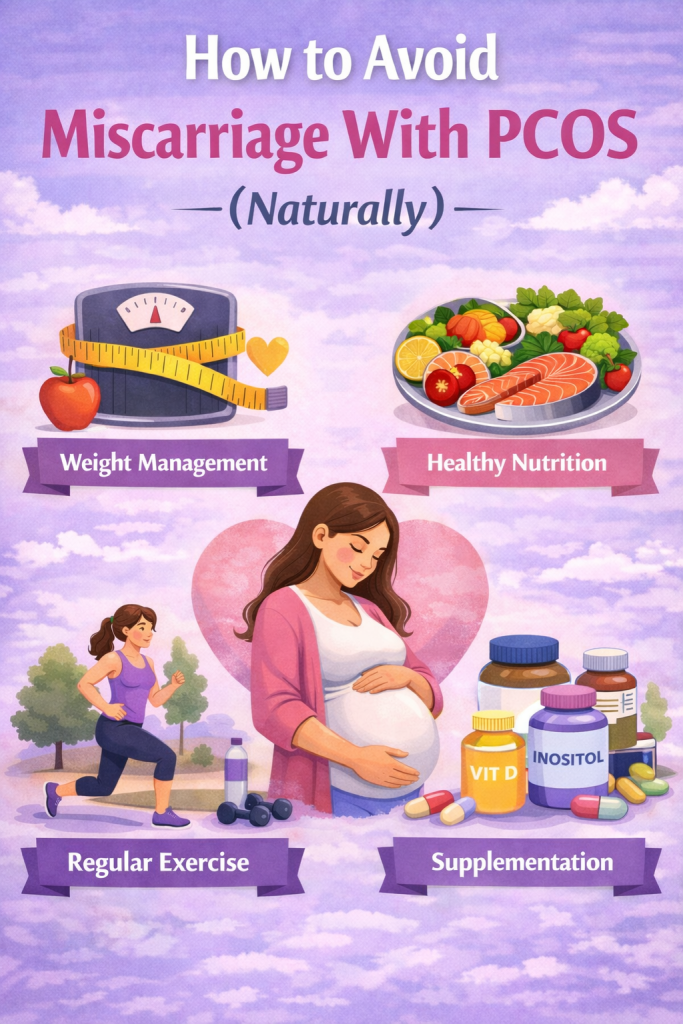
How to Avoid Miscarriage With PCOS (Naturally)
To naturally prevent pregnancy miscarriage in PCOS, focus primarily on addressing the underlying metabolic and hormonal imbalances. Evidence shows that lifestyle interventions can significantly improve pregnancy outcomes.
Weight management is important. Losing just 5% of your body weight can have metabolic, reproductive, and psychological benefits. This modest reduction helps restore normal ovulation cycles, making it easier to get pregnant naturally.
Nutrition matters tremendously. Women who followed healthy eating patterns with vegetables, cereals, and legumes before conception were three times more likely to have a healthy pregnancy. Focus on foods with a low glycemic index to help control insulin resistance, which affects up to 95% of overweight women with PCOS.
Regular exercise is also essential.Aim for 30 minutes of moderate activity three to five times a week. It helps to manage weight and regulate hormone levels. Stress management techniques like meditation or yoga can also boost fertility.
Consider taking appropriate supplements after consulting your healthcare provider:
- Vitamin D supplementation improves insulin sensitivity
- Inositol (myo and d-chiro) restores ovulation in 72% of women
- N-acetylcysteine works effectively to reduce insulin resistance
Addressing these factors can significantly improve your chances of a successful pregnancy while reducing miscarriage risk related to PCOS.
You Are Not Alone
Trying to conceive with PCOS can feel overwhelming, especially with concerns about miscarriage. While PCOS is linked to a slightly higher miscarriage risk, pregnancy is possible, and many women are able to conceive naturally. Hormonal imbalance, insulin resistance, and early pregnancy factors play a role, but proactive care makes a real difference.
You don’t need any complicated PCOS treatment. Small lifestyle improvements like losing 5–10% of body weight, following a balanced low-glycemic diet, staying active, and seeking early prenatal care can significantly improve outcomes. With the right guidance, monitoring, and support, most women with PCOS go on to have healthy pregnancies. You are not alone in this journey—we are here to support and guide you every step of the way.
Take your first step to getting pregnant naturally with Premom now!
Summary
Women with PCOS may have a slightly higher PCOS miscarriage risk, mainly due to hormonal imbalance, insulin resistance, and ovulation irregularities, but miscarriage is not inevitable. Research shows that with proper lifestyle management before and during pregnancy, this risk can be significantly reduced. Weight management, balanced low-glycemic nutrition, regular exercise, and targeted supplements like vitamin D and inositol can improve ovulation and pregnancy outcomes.
Many women with PCOS pregnancy challenges are able to achieve natural conception and go on to have healthy pregnancies with the right support and monitoring.
FAQ’s – About PCOS, Pregnancy, and Miscarriage
PCOS is a long-term hormonal condition, and it does not permanently go away during pregnancy. However, many women notice temporary improvement in their symptoms while pregnant. After delivery, PCOS-related symptoms may return, which is why understanding your cycle and tracking ovulation remain important even after pregnancy.
Early pregnancy care is especially important for women with PCOS. Stable blood sugar, gentle physical activity, good sleep, and stress management play a key role. Early scans and hormone monitoring help ensure the pregnancy progresses well. Tracking ovulation before conception using ovulation predictor kits can help you enter pregnancy with better hormonal timing.
PCOS does not directly harm the baby. With early detection, ovulation tracking, and good metabolic control, most women with PCOS can deliver healthy babies. The key is awareness, not fear.
Yes. Many women with PCOS conceive naturally. While your ovulation may be irregular, identifying your fertile window is possible with consistent LH tracking. Premom helps users recognize LH patterns, peaks, and fertile days even when cycles are irregular, supporting natural conception.
References:
- Alves, C., Rapp, A., & Cowan, L. (2023). Early pregnancy loss (spontaneous abortion). In StatPearls. StatPearls Publishing. https://www.ncbi.nlm.nih.gov/books/NBK560521
- Avalos, L. A., Galindo, C. M., & Li, D. (2012). A systematic review to calculate background miscarriage rates using life table analysis.Paediatric and Perinatal Epidemiology, 26(3), 123–133.https://pubmed.ncbi.nlm.nih.gov/22511535
- Alves, C., Rapp, A., & Cowan, L. (2023). Early pregnancy loss (spontaneous abortion). In StatPearls. StatPearls Publishing.https://www.ncbi.nlm.nih.gov/books/NBK560521
- Boomsma, C. M., Eijkemans, M. J. C., Hughes, E. G., Visser, G. H. A., Fauser, B. C. J. M., & Macklon, N. S. (2006). A meta-analysis of pregnancy outcomes in women with polycystic ovary syndrome.Human Reproduction Update, 12(6), 673–683. https://pubmed.ncbi.nlm.nih.gov/16954187/
- Wilcox, A. J., Weinberg, C. R., O’Connor, J. F., Baird, D. D., Schlatterer, J. P., Canfield, R. E., Armstrong, E. G., & Nisula, B. C. (1988). Incidence of early loss of pregnancy.The New England Journal of Medicine, 319(4), 189–194. https://pubmed.ncbi.nlm.nih.gov/3393170/