Tracking your basal body temperature (BBT) is a great way to track ovulation through the identification of temperature rises in your body due to increased progesterone production after ovulation.
Traditionally, the only ways to gauge adequate progesterone levels were by tracking BBT or getting a blood test. Doctors often would order a serum, day-21 progesterone test or 7-DPO in hopes of capturing progesterone after ovulation. However, this process not only invovled a trip to the doctor’s office and an uncomfortable needle-stick, but also a potential risk of missing the actual timing of ovulation.
Ovulation tracking can be tricky, and there are a few common challenges you might run into:
- Your BBT doesn’t show a clear spike
- You miss a few days of temping and can’t see your coverline
- You struggle to track your temperature consistently every morning
- You suffer from a thyroid imbalance that may affect your basal body temperature
You could visit a reproductive endocrinologist, who uses ultrasounds to track follicle growth and ovulation—but this is expensive and requires frequent clinic visits throughout your cycle.
Fortunately, advancements in at-home hormone testing offer a more convenient way to gain insight into your cycle and suggest that ovulation may have occurred–including progesterone testing or PdG testing.
What is PdG and PdG Test?
PdG (Pregnanediol Glucuronide) is a urine metabolite of progesterone, the hormone that plays a crucial role in the menstrual cycle and pregnancy. After ovulation, your body breaks down progesterone, and PdG is what remains. Measuring PdG levels in urine may indicate that ovulation has occurred, providing valuable information if you are trying to conceive.
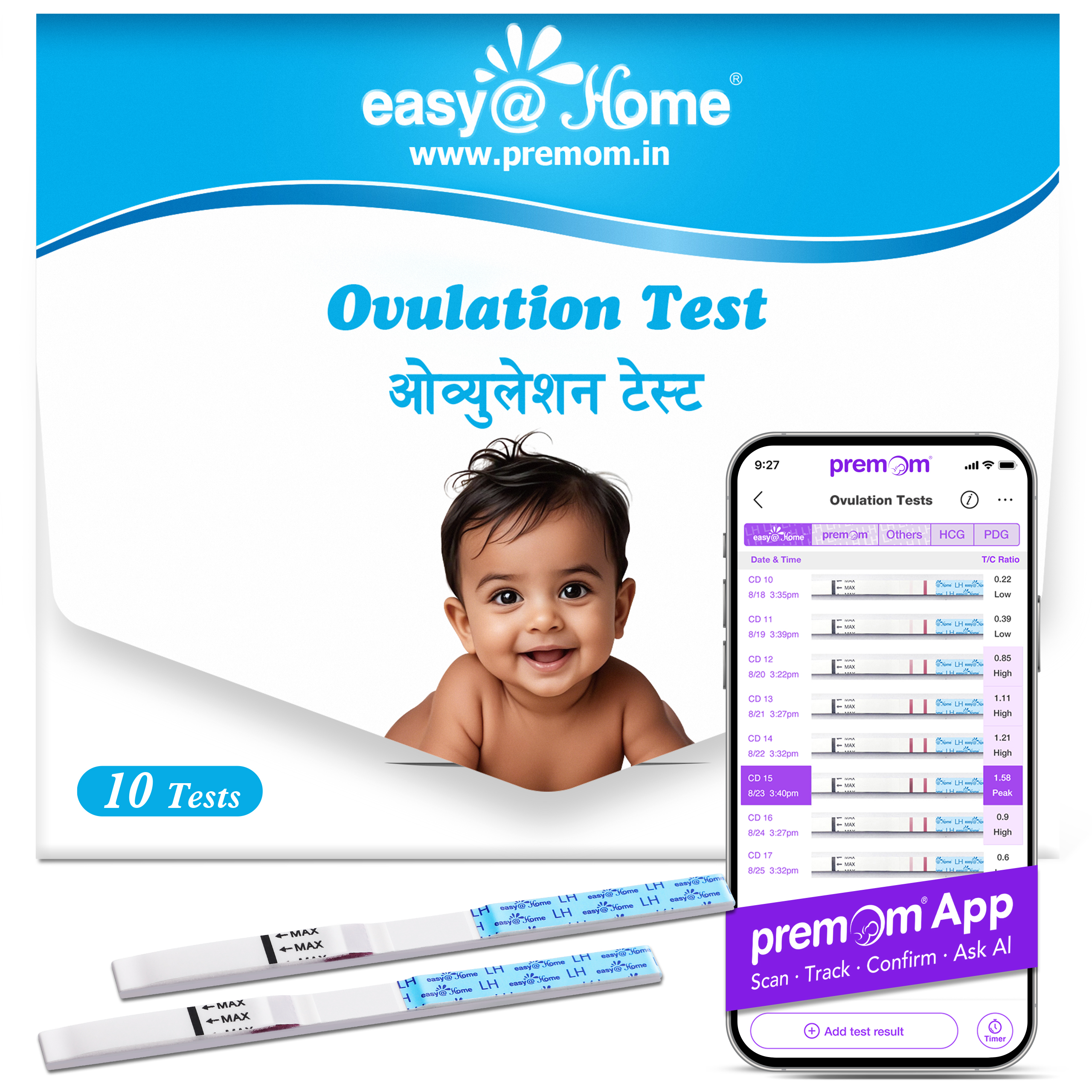
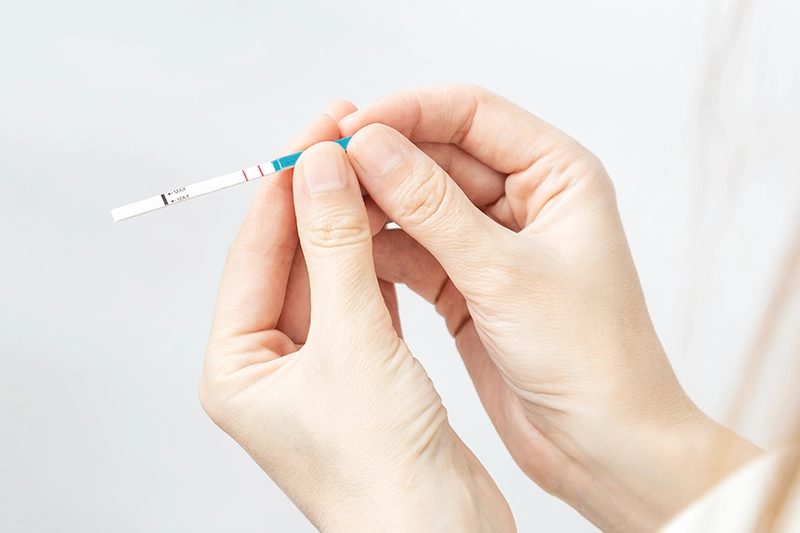
PdG tests are at-home urine tests that come with easy-to-use test strips. They are very similar to ovulation tests that measure luteinizing hormone (LH) and pregnancy test strips that measure human gonadotropin hormone (hCG)—dip a test strip in urine and read the results a few minutes later. All three types of fertility tests can be read, stored, and charted in the free Premom Ovulation Tracker app. Talk about a convenient way to track your hormone levels!
Tracking Progesterone To Identify Ovulation
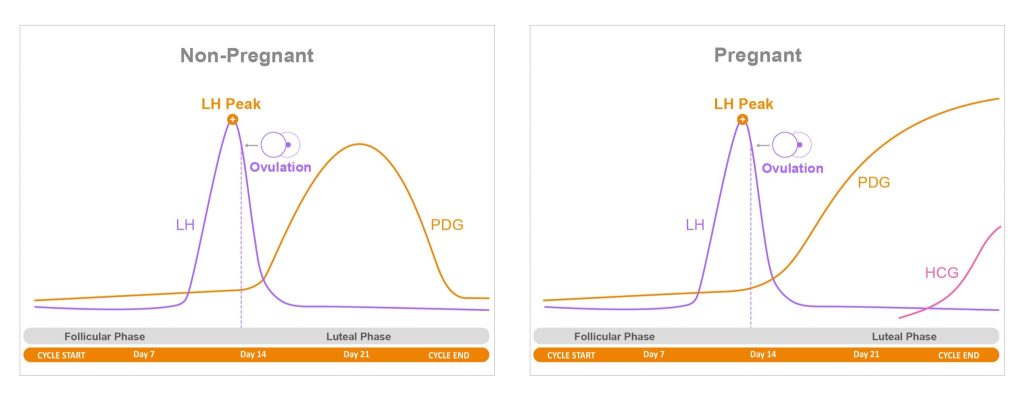
Measuring progesterone may indicate that ovulation has occurred. After ovulation, progesterone reduces cervical mucus production, increases body temperature by 0.4-1.0ºF, helps the uterus get ready for a fertilized egg, reduces muscle movements in the uterus, and supports early pregnancy.
Traditionally, progesterone was measured through blood tests. However, with PdG tests, you can measure pregnanediol (PdG), the metabolite of progesterone, using at-home progesterone urine test strips or PdG tests. Tracking progesterone levels this way helps you better understand your cycle and improves your chances of timing sex for your best chance of getting pregnant.

Research shows that PdG typically begins to rise 24-36 hours after ovulation and reaches a detectable high level (5μg/mL) about five days after a positive ovulation test [3].
Since this timing is after the LH surge that occurs before ovulation day, a PdG test is ideal to indicate if ovulation may have occurred. PdG tests have often been used in association with cervical mucus tracking [5].
The Luteal Phase and Progesterone
The luteal phase–the second half of the menstrual cycle–is dominated by progesterone, the hormone released with successful ovulation. Without ovulation, the presence of progesterone is highly unlikely. (This may be due to other medical conditions.)
The luteal phase consists of three phases that are similar in length for most women. Progesterone levels increase during the first two phases:
- Luteinization Process (early stage): Progesterone starts rising
- Progestation Process (middle stage): Peak progesterone levels support implantation
- Luteolysis Process (late stage): Progesterone drops if pregnancy doesn’t occur
Again, with PdG testing, progesterone levels that are at least 5μg/mL can be detected and used to indicate that ovulation may have occurred.
- PdG can be detected as early as 3 days after ovulation.
- PdG levels are typically highest seven days after an LH peak.
When To Use Progesterone (PdG) Testing
Adding PdG testing to your fertility tracking can give you more confidence when trying to conceive.
This is especially helpful if you:
- Haven’t found any positive ovulation test results after multiple cycles
- Have LH surges that are inconsistent or last longer than 7 days
- Have positive ovulation tests all cycle long
- Have an irregular ovulation cycle and menstrual cycle
- Have PCOS (Polycystic Ovary Syndrome) or other fertility concerns
How PdG Tests Support You: Understanding 3 Possible Test Results
1. You See No LH Surge But See a PdG Spike
If you don’t see an LH surge with an ovulation test, but you find a positive PdG test result, ovulation likely happened. With that information, you can focus on the possible reasons you may have missed your LH peak:
- Your LH surge level was too low to be detected
- Your LH surge was too rapid and was missed
2. You See No LH Surge and No PdG Spike
If you don’t observe a positive LH test result or a positive PdG test result, we recommend you track your basal body temperature (BBT) to help better understand whether you have ovulated or not. If the BBT chart doesn’t show a noticeable temperature spike, we recommend that you visit your doctor to check whether there is an ovulation dysfunction issue, i.e., not ovulating.
3. You See an LH Surge and a PdG Spike
This is the ideal scenario! Most fertile women normally observe both their LH peak and PdG spike. Seeing these results is a good indicator that ovulation likely occurred. If you track with the Premom fertility app, it can help predict both your next ovulation day and period start dates when you track using ovulation tests, BBT and PdG tests.
References
- Blackwell LF, Vigil P, Gross B, d’Arcangues C, Cooke DG, Brown JB. Monitoring of ovarian activity by measurement of urinary excretion rates of estrone glucuronide and pregnanediol glucuronide using the Ovarian Monitor, Part II: reliability of home testing. Hum Reprod. 2012;27(2):550-557. doi:10.1093/humrep/der409
- Blackwell LF, Vigil P, Cooke DG, d’Arcangues C, Brown JB. Monitoring of ovarian activity by daily measurement of urinary excretion rates of oestrone glucuronide and pregnanediol glucuronide using the Ovarian Monitor, Part III: variability of normal menstrual cycle profiles. Hum Reprod. 2013;28(12):3306-3315. doi:10.1093/humrep/det389
- Bouchard TP, Fehring RJ, Schneider M. Pilot Evaluation of a New Urine Progesterone Test to Confirm Ovulation in Women Using a Fertility Monitor. Front Public Health. 2019;7:184. Published 2019 Jul 2. doi:10.3389/fpubh.2019.00184
- Ecochard R, Bouchard T, Leiva R, et al. Characterization of hormonal profiles during the luteal phase in regularly menstruating women. Fertil Steril. 2017;108(1):175-182.e1. doi:10.1016/j.fertnstert.2017.05.012
- Ecochard R, Boehringer H, Rabilloud M, Marret H. Chronological aspects of ultrasonic, hormonal, and other indirect indices of ovulation. BJOG an International Journal of Obstetrics & Gynaecology. 2001;108(8):822-829. doi:10.1111/j.1471-0528.2001.00194.x
- Leiva R, McNamara-Kilian M, Niezgoda H, Ecochard R, Bouchard T. Pilot observational prospective cohort study on the use of a novel home-based urinary pregnanediol 3-glucuronide (PDG) test to confirm ovulation when used as adjunct to fertility awareness methods (FAMs) stage 1. BMJ Open. 2019;9(5):e028496. Published 2019 May 27. doi:10.1136/bmjopen-2018-028496
- Wegrzynowicz AK, Beckley A, Eyvazzadeh A, Levy G, Park J, Klein J. Complete Cycle Mapping Using a Quantitative At-Home Hormone Monitoring System in Prediction of Fertile Days, Confirmation of Ovulation, and Screening for Ovulation Issues Preventing Conception. Medicina (Kaunas). 2022;58(12):1853. Published 2022 Dec 15. doi:10.3390/medicina58121853