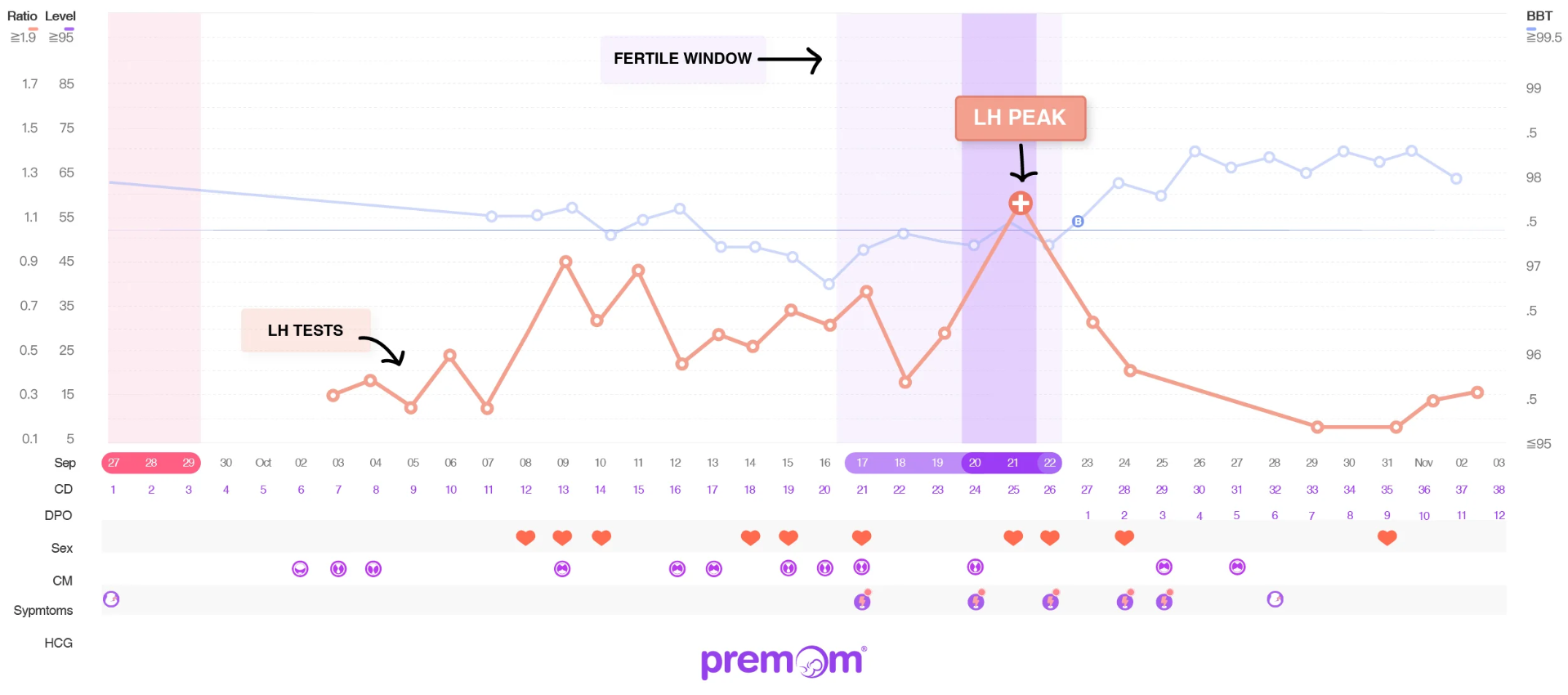
Seeing a positive ovulation test result for a few consecutive days can be confusing. Usually, an ovulation test will be able to detect the LH surge that occurs 24-36 hours before ovulation. However, if your positive ovulation test result is seen for 3, 5, or even 7 days, it could indicate a plateau surge, double surge, PCOS, early pregnancy, or problems with testing times.
Here’s what multiple positive ovulation test results mean and steps you could take next.
Decoding your results: What a positive ovulation test really means?
A positive ovulation test result indicates that your body is preparing to release an egg. These tests measure Luteinising Hormone (LH) in your urine.
How ovulation tests work
Ovulation test strips detect LH in urine because this hormone acts as the “green light” from your brain to your ovaries. When your brain decides it is time to release an egg, it releases a “surge” of LH.
- LH surge: This is the entire window where LH levels are high enough for an ovulation test kit to show a positive.
- Peak ovulation day: This is the absolute highest point within that surge, usually occurring 24–36 hours before the egg is released.
How long should an ovulation test stay positive?
Usually, a positive ovulation test lasts for 12–48 hours. However, some women may see a positive result for 2–3 days. If your test remains positive for longer than 4 days, it may require further evaluation.
If you are wondering how long an ovulation test will stay positive, remember that every person has a different “hormone signature.” Some have a short spike, while others have a longer plateau.
Why am I getting multiple positive ovulation tests?
If your ovulation test is showing dark lines for several days, it usually comes down to one of these structured scenarios:
1. Plateau LH surge
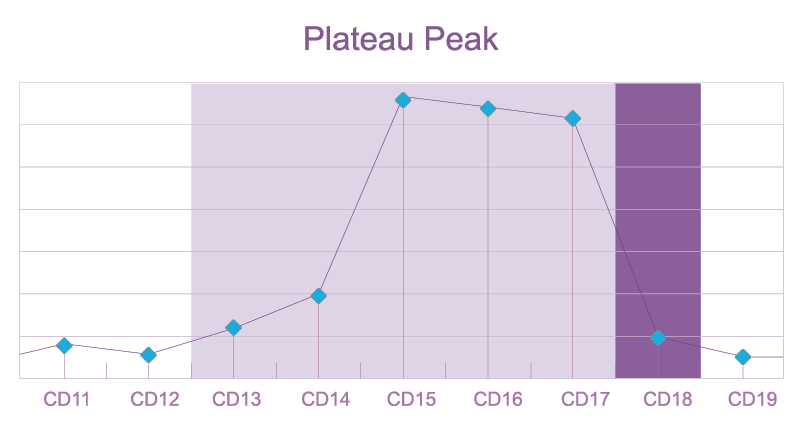
2. Double LH surge
Sometimes the brain sends the LH signal, but the ovary isn’t ready, perhaps due to stress or illness. The LH level rises (first positive), dips, and then rises again a few days later (second positive) when the body tries again.
3. Multiple LH surges in one cycle

4. PCOS (Polycystic Ovary Syndrome)
People with PCOS often have a higher baseline level of LH. This can cause an ovulation test to always result in positive or “false” positives throughout the month because the hormone never fully drops.
5. Early pregnancy
The molecular structure of LH is very similar to hCG (the pregnancy hormone). A very dark positive ovulation test late in your cycle might actually be picking up a pregnancy.
6. Fertility medications
Drugs used to stimulate ovulation can cause LH levels to stay high, leading to a persistent ovulation kit positive.
7. Testing too frequently
Testing multiple times a day might catch the very beginning and very end of a surge, making it seem longer than it actually is.
Can a positive ovulation test mean you’re pregnant?
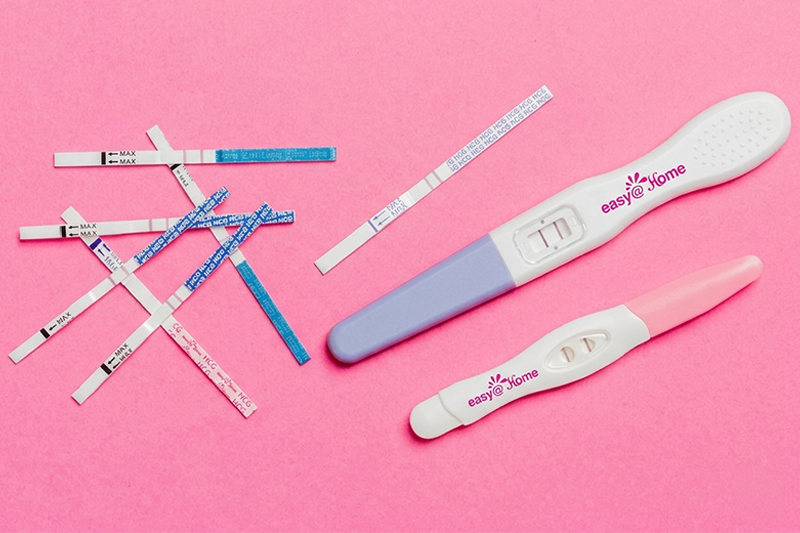
Yes, it can. This happens because the “ovulation hormone” (LH) and the “pregnancy hormone” (hCG) are almost identical in their chemical structure. Because they look so similar, an ovulation test can’t always tell the difference and may mistake pregnancy hormones for ovulation hormones.
Is it a reliable way to test for pregnancy?
No. While an ovulation test might turn positive if you are pregnant, it is much less sensitive and specific than a real pregnancy test. A pregnancy test is designed to look only for the unique part of the pregnancy hormone, making it far more accurate.
If you are asking, “Will an ovulation test be positive if pregnant?” The answer is yes, but you should always confirm with a standard pregnancy test for accuracy.
Why is my ovulation test positive in the morning but negative at night?
Timing is crucial when determining when to take an ovulation test, morning or night. LH is typically produced in the early morning but takes several hours to appear in urine.
The best testing time is usually between 10:00 AM and 8:00 PM. If you test in the morning, you might catch the end of yesterday’s surge, while a night test might miss a short LH surge timing window.
What if my ovulation kit is positive for 5-7 days?
If your ovulation tests (OPKs) stay positive for 5 to 7 days in a row, it means your ovulation hormone (LH) is staying high. This is usually a sign that your body is trying – but struggling – to release an egg, or that your hormone levels are out of balance.
If this happens every month, you should consult a doctor. Constant positives make it difficult to identify your peak ovulation day, which is necessary for successful conception.
How to confirm ovulation after a positive ovulation test
A positive ovulation test only shows that your body is trying to ovulate. To confirm if ovulation actually happened, you can use:
- Basal Body Temperature (BBT): A resting body temperature that stays higher than usual for at least three days may suggest that ovulation has occurred. This shift typically shows a temperature increase of 0.5°C to 1.0°C compared to the six days before the suspected egg release.
- Progesterone (PdG) Rise: Using at-home test urine strips to measure PdG (a marker of progesterone) may help determine if ovulation was likely successful. These strips look for the urine PdG level to reach or exceed 5 μg/mL for three consecutive days during the “implantation window,” which is roughly 7 to 10 days after your LH peak.
- Ultrasound: A doctor can confirm ovulation by using an ultrasound to see that the once-large, fluid-filled follicle has “deflated” and turned into a grainy-looking gland called the corpus luteum.
- Trend Tracking: Apps like Premom help you see the “peak” among multiple positives.
When should you see a doctor?
While variations are normal, you should seek medical advice if you:
- have persistent irregular cycles
- suspect PCOS due to constant positive tests
- cannot confirm ovulation with BBT or PdG tests
- have been trying to conceive for > 12 months (or 6 months if over age 35)
How to identify your true peak
When you see multiple positives, the most important one to identify is your LH Peak. This is the highest numerical value among your multiple LH results.
Using the Premom app makes this easy. Instead of guessing which line is darker, you can scan your strips into the app. The app digitises the results and identifies your Peak.
- Tracks LH trends: It digitises the line darkness to find your true “peak.”
- Detects double surges: It maps your cycle to show if your body is making multiple attempts.
- Pattern insights: It helps you understand if you have a “plateau” or “spike” pattern.
| If your LH test looks like… | It means… | Action to take |
| First Positive | Your fertile window is open | Ensure timely intercourse. Begin checking your cervical mucus for a stretchy, “egg-white” texture. |
| Multiple Positives | Your LH surge is ongoing or plateauing | Continue having intercourse every other day. Keep logging your BBT each morning to watch for a potential rise. |
| Peak (Highest Value) | Ovulation is likely 24-36 hours away | This is the most fertile day. Do not miss this window. This is usually when cervical mucus is most abundant. |
| Back to Negative | Your LH levels are dropping | Ovulation has likely occurred or is ending. Look for a BBT shift and consider PdG testing in a few days. |
Frequently asked questions (FAQs)
Yes, many women see 2–3 days of positives depending on their LH surge pattern.
While an ovulation test typically stays positive for 1–2 days, seeing positives for 4 or more days may suggest a hormonal imbalance or that your body is making multiple attempts to release an egg, so you should track your BBT and cervical mucus to help determine if ovulation was likely successful.
Because PCOS often causes naturally elevated LH levels, you may see frequent or “always positive” results; to gain more clarity, you should use Basal Body Temperature (BBT) and Cervical Mucus tracking to help determine if a true “peak” and successful ovulation likely occurred.
Yes, hCG is similar to LH and can trigger a positive result on an ovulation strip.
This usually means your LH levels are rising as you approach your peak ovulation day.
Yes, if you have a “rapid onset” surge, you might miss it if you don’t test frequently enough.
It is helpful to test until you see the levels drop back down to confirm the peak has passed.
Take charge of your fertility journey
Seeing multiple positive ovulation tests doesn’t have to be a source of stress. By tracking your trends over a few months, you will start to see the unique signature of your cycle.
Ready to stop the guesswork? Download the Premom app today to scan your LH tests and see your LH curve in real-time. Whether you are navigating long surges or want to use our AAE (Ask An Expert) feature to get professional feedback on your charts, we provide the tools to help you reach your goals faster. You don’t have to wonder anymore – let the data lead the way.
Disclaimer: This content is for informational purposes only and does not replace professional medical advice. Please consult a qualified healthcare provider for diagnosis and treatment.
References
- Teede HJ, Tay CT, Laven J, et al. Recommendations from the 2023 International Evidence-based Guideline for the Assessment and Management of Polycystic Ovary Syndrome. Fertility and Sterility. 2023;120(4):767-793. doi:10.1016/j.fertnstert.2023.07.025, https://pubmed.ncbi.nlm.nih.gov/37589624/
- Effect of high LH/FSH ratio on women with polycystic ovary syndrome undergoing in vitro maturation treatment. PubMed. Published June 1, 2013. https://pubmed.ncbi.nlm.nih.gov/23763006/
- Demir A, Hero M, Holopainen E, Juul A. Quantification of urinary total luteinizing hormone immunoreactivity may improve the prediction of ovulation time. Frontiers in Endocrinology. 2022;13:903831. doi:10.3389/fendo.2022.903831,