
Many women look for ways to get pregnant naturally when first deciding that they want to have a child. The benefits of planning a natural pregnancy include having personal control over your own pregnancy, avoiding artificial methods that may be invasive or expensive, and a more conscious awareness of your overall health during the fertility process.
Listed below are three things to do if getting pregnant naturally is important to you:
1. Learn About Pregnancy
Get to know the hormones LH, PdG, HcG, and how they affect your body and your pregnancy.
There are three major hormones that are especially important to know when trying to conceive naturally: luteinizing hormone (LH), progesterone (PdG), and human chorionic gonadotropin (hCG).
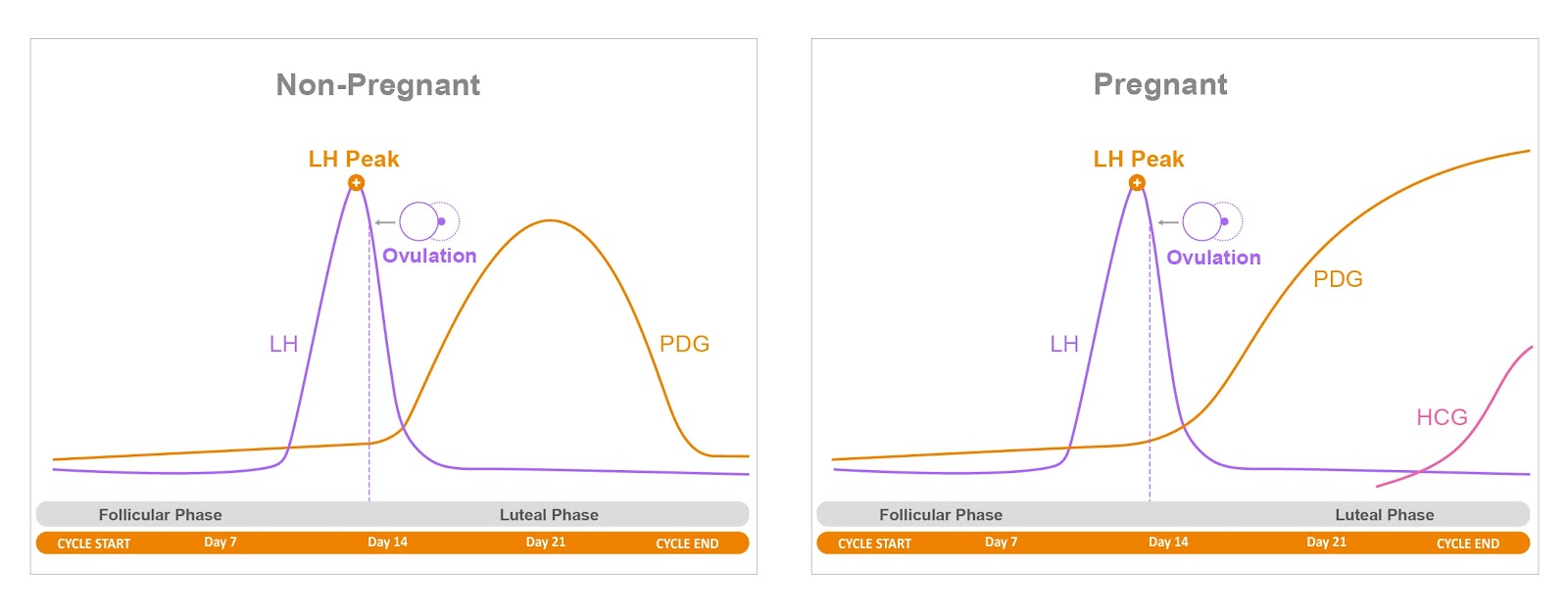
- A surge in LH signals that ovulation will occur in the next 24 to 36 hours, and it is the optimal time to have intercourse.
- PdG levels increase after ovulation, thus indicating that ovulation has occurred.
- HCG is the hormone that indicates you are pregnant.
Premom provides several at-home pregnancy testing kits you can use to test for each of these hormones before and while trying to conceive.
2. Learn About The Natural Conception Process
Understand that natural conception is viable, especially when you are in tune with your body and its cycles.
Researching fertility, testing different aspects of your fertility, and learning about your body is not only useful, but deeply empowering. Independently taking control of the process of conception – and succeeding – is an accomplishment that should be celebrated!
Doctor intervention or expensive fertility treatments are often not necessary for most women to get pregnant, and most women can achieve pregnancy through research and an understanding of one’s own body.
3. Learn How To Track Your Fertility
Research the different ways you can track your fertile window so you know when to time intercourse and maximize your chances of getting pregnant naturally.
There are four primary ways to calculate your best fertile days:
- Using ovulation predictor kits
- Period tracking
- Basal body temperature (BBT) charting
- Cervical mucus tracking
Ovulation Tests
An ovulation prediction kit measures the presence of LH in your urine, a hormone that increases before ovulation to prepare for the release of the egg. Testing consistently every day before your predicted fertile window gives you the most accurate results; a surge in LH levels means that ovulation will likely occur within 24-36 hours. The best time to take an ovulation test is generally in the afternoon, unless instructed differently by the manufacturer.

The Premom app allows users to comprehensively store tracked information to form a detailed analysis of the fluctuations in their bodies, all in one convenient app.
Period Tracking
Period tracking is also referred to as using the Calendar/Rhythm Method. Tracking your period consistently every month allows you to see the average length of your menstrual cycle, predict your fertile window through your calculations, and time intercourse appropriately.
The Premom app allows users to track their period and uses their personal information to predict a user’s fertile window and specific day of ovulation. Period calculators that predict your next period and period trackers that log your period are the first step to natural family planning because menstruation is the foundation of all hormonal cycles in the female body, including ovulation.
To use period tracking as a natural ovulation predictor, you must understand the four phases of the ovarian cycle:
- The Luteal Phase
- The Follicular Phase
- Menstruation (included within the Follicular Phase)
- Ovulation Day
Both the ovulation day and the period day can vary from cycle to cycle, however, the Luteal Phase length — the day after ovulation day until the day before your next period — is usually a fixed length and does not typically fluctuate much.
This is how, if you have a regular period and regularly ovulate, you can predict ovulation easily with a period calculator.
Being able to predict ovulation through menstrual cycle tracking is very useful to getting pregnant naturally, because the five days before ovulation, and ovulation day is your fertile window.

Basal Body Temperature Charting
When your body ovulates, progesterone (PdG) is produced which causes your body’s temperature to rise. Your basal body temperature (BBT) will spike 0.5-1ºF 24-36 hours after you ovulate. If you’re pregnant, it remains high. If you’re not pregnant, it drops back down right before menstruation begins again. (See the blue line in the Premom chart screenshot.)
To chart your BBT, you must take your temperature every morning with a basal body temperature thermometer before you get out of bed or move around. Talking, moving around, and walking to the bathroom might cause your temperature to rise slightly and lead to inaccurate charting.
Once you consistently track your BBT for a couple of cycles, you can see your BBT spikes and assess ovulation occurred.
Identification of ovulation by BBT tells you that your body is ovulating properly and regularly. When used along with period tracking, it also indicates your period calculator is accurate and helps you conceive naturally.

This BBT Fertility Tracker can be synced to the Premom app on your phone to chart your temperature automatically and accurately. This way your information is stored in one place, and you can avoid the stress of manually tracking your BBT.
Cervical Mucus Tracking
Your cervical mucus is the visible discharge that changes in consistency throughout your menstrual cycle. You can check the color, texture, and quantity of your cervical mucus in three easy ways:
- Using white toilet paper, wipe the opening of your vagina before peeing, and check the color and texture of the cervical mucus on the paper.
- Be aware of the color and texture of the cervical mucus on your underwear.
- Put clean fingers at the entrance to the vagina and check the color and texture of the discharge on your fingers while bearing down or making a ‘kegel’ movement
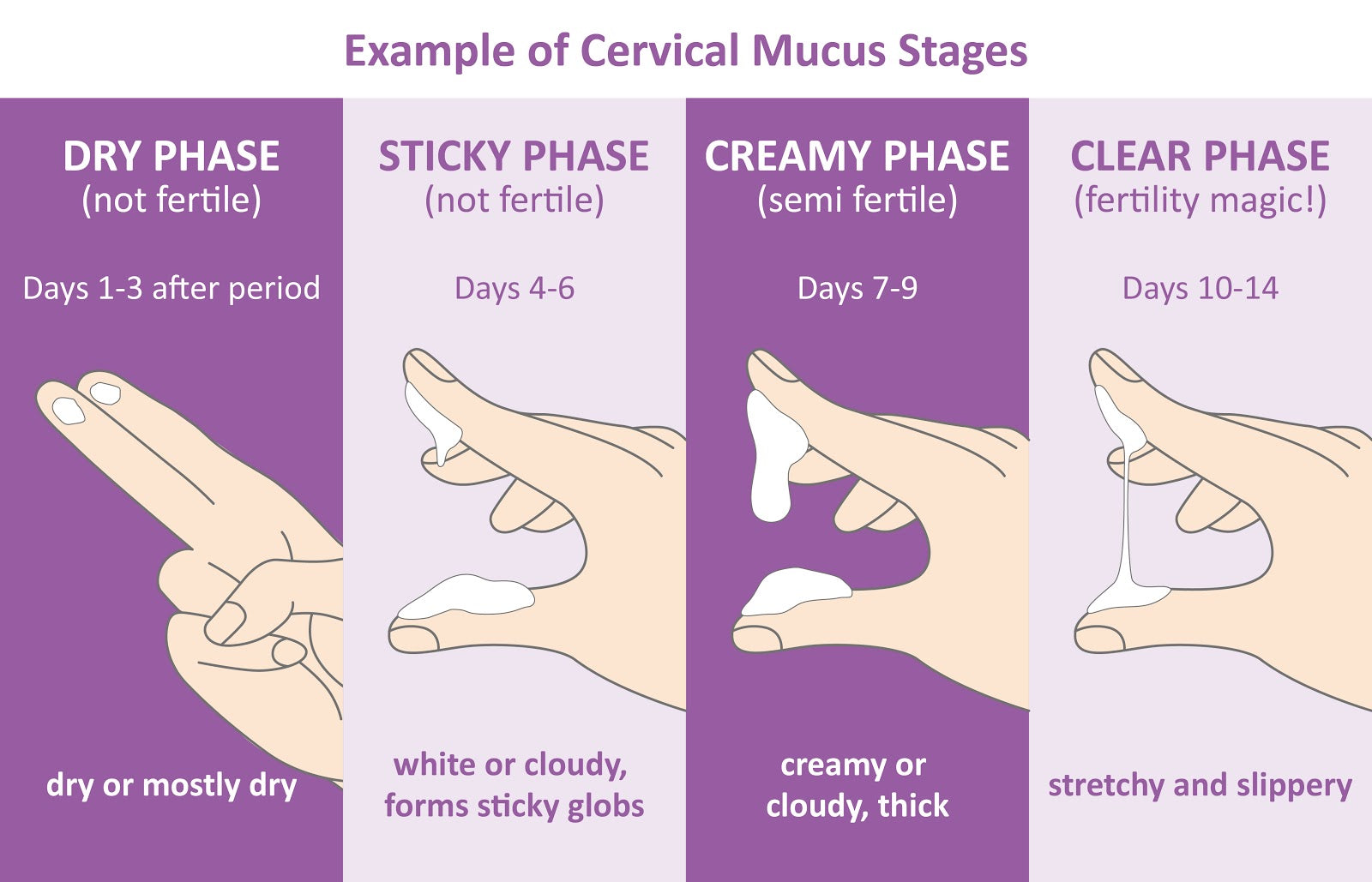
In the average cycle length of 28 days, there are about 3 to 4 dry days following a 5 day period flow. After these dry days, the body begins to make more mucus as an egg begins to ripen. Closer to ovulation is when your cervical mucus turns clear and slippery – this signals that your body is the most fertile, and it is the best time to have sex to get pregnant.
After approximately 4 days of clear, slippery mucus and after ovulation, you will see mucus of a cloudy and sticky consistency in smaller quantities, followed by a few dry days. Then, your period begins and the cycle starts over again. Cervical mucus stages may vary by cycle day and person, but the trend is constant for a healthy ovulation cycle. Below is an example of a cervical mucus cycle.

Recording the color and texture of your discharge to follow your cervical mucus stages allows you to plan the best times to have intercourse because it makes you more aware of when your body is the most fertile.
Having Trouble Conceiving Naturally?
If natural family planning is important to you, you’re doing everything you can to get pregnant naturally, and you are still not seeing results, you may be experiencing fertility issues like PCOS or endometriosis, or your partner could be experiencing male fertility issues.
Consider making an appointment to speak with your doctor or OB/GYN, or booking a virtual fertility consultation with one of Premom’s in-app fertility specialists.

References
NFP basic Information. USCCB. https://www.usccb.org/topics/natural-family-planning/nfp-basic-information.
Steward K, Raja A. Physiology, Ovulation And Basal Body Temperature. In: StatPearls. Treasure Island (FL): StatPearls Publishing; July 17, 2023.
Lee I, Prabhu S, Singhal M, Tor A, Cauwenberghs G. Luteinizing hormone dynamics in menstruation. 2022 44th Annual International Conference of the IEEE Engineering in Medicine &Amp; Biology Society (EMBC). July 2022. doi:10.1109/embc48229.2022.9871940
Gibbons T, Reavey J, Georgiou EX, Becker CM. Timed intercourse for couples trying to conceive. Cochrane Database Syst Rev. 2023;9(9):CD011345. Published 2023 Sep 15. doi:10.1002/14651858.CD011345.pub3
Wegrzynowicz AK, Beckley A, Eyvazzadeh A, Levy G, Park J, Klein J. Complete Cycle Mapping Using a Quantitative At-Home Hormone Monitoring System in Prediction of Fertile Days, Confirmation of Ovulation, and Screening for Ovulation Issues Preventing Conception. Medicina (Kaunas). 2022;58(12):1853. Published 2022 Dec 15. doi:10.3390/medicina58121853