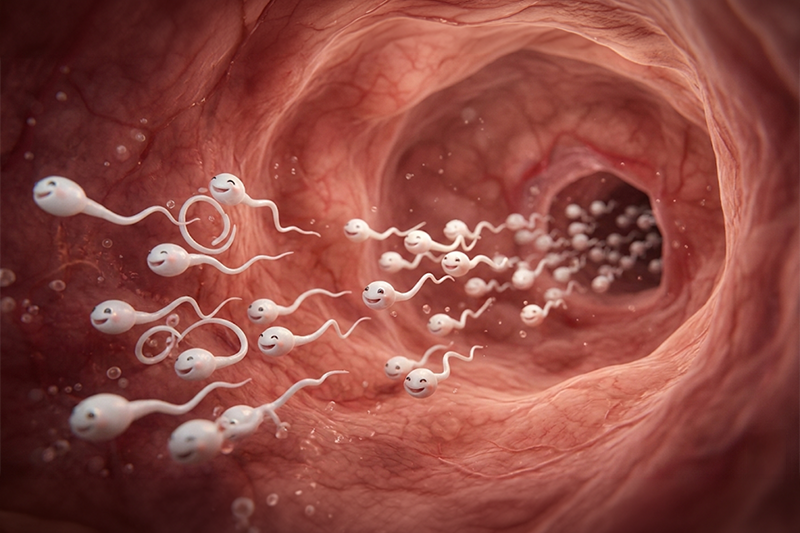
Understanding your fertile window can be challenging. Many people ask how long sperm survive in the female body and how this impacts pregnancy. Knowing this can help you plan intercourse and feel more confident about your cycle.
How long can sperm live after intercourse?
After intercourse, sperm can live inside a woman’s body for up to five days under the right conditions. When sperm enter the vagina, many do not survive. The strongest sperm move into the uterus and fallopian tubes.
Sperm survival depends on cervical mucus quality, cycle timing, and reproductive health, typically lasting three to five days.
Outside the body, sperm usually survive only a few minutes to a few hours, depending on the environment.
Why can sperm live for several days?
Sperm can live for several days because the female reproductive system creates a supportive environment around the time of ovulation.
Role of cervical mucus
Cervical mucus is a fluid produced by the cervix. Around ovulation, it becomes clear, slippery, and stretchy, similar to egg whites. This helps sperm move more easily, stay alive longer, and travel toward the egg.
When cervical mucus is fertile and abundant, sperm often survive longer. At other times in the cycle, mucus may be thicker or drier, which can limit sperm survival.
When is sperm most likely to survive?
Sperm survival is closely linked to the fertile window.
The fertile window includes:
- the five days before ovulation
- the day of ovulation
If intercourse happens during this time, sperm may remain alive in the fallopian tubes while waiting for the egg to be released. Once ovulation occurs, the egg lives for about 12 to 24 hours. This is why timing matters.
What affects how long a sperm can live?
Several factors may influence the lifespan of sperm inside the body. Understanding these can help explain the variations.
1. Timing in the cycle
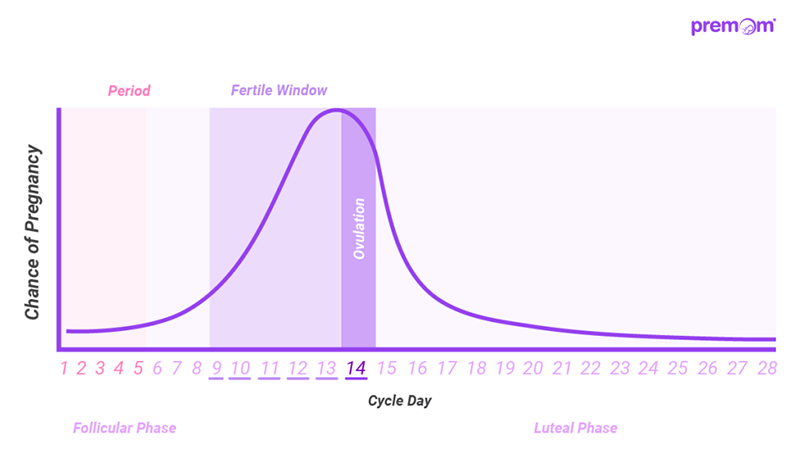
As ovulation approaches, sperm often live longer.
2. Cervical mucus quality
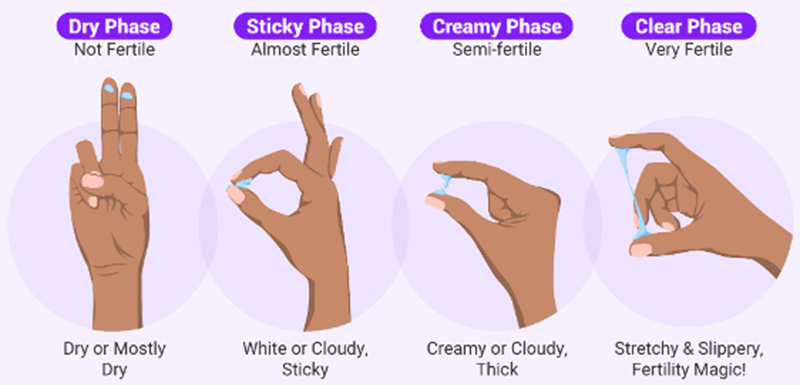
Sperm survival may be supported by healthy, fertile mucus.
3. Sperm health
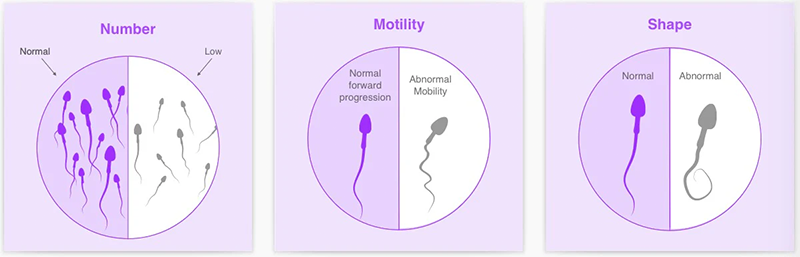
Sperm count, movement, and shape can influence how well sperm travel and survive.
Sperm lifespan in different environments
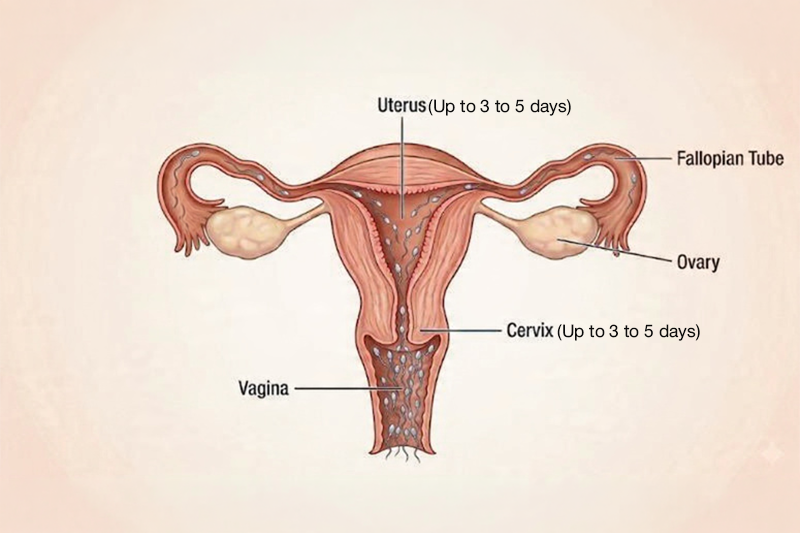
| Location | Can Sperm Survive Here? | Approximate Lifespan | Clinical Explanation |
| Vagina | Limited survival | Minutes to about 1 hour | The vagina has an acidic pH, which is harsh to sperm. Many sperm die quickly unless protected by semen and rapid movement toward the cervix. |
| Cervix | Yes | Up to 3 to 5 days (during the fertile window) | Around ovulation, cervical mucus becomes thin and supportive. It nourishes and protects sperm, allowing longer survival. Outside the fertile window, thick mucus reduces survival. |
| Uterus | Yes | Up to 3 to 5 days | After passing the cervix, sperm can survive in the uterine cavity, especially when fertile cervical mucus is present. However, most sperm do not survive this long. |
| Fallopian Tubes | Yes | Up to 3 to 5 days (rarely slightly longer) | This is the site of fertilisation. A small number of healthy sperm can remain viable here while waiting for ovulation. Survival depends on the quality of cervical mucus and overall sperm health. |
Can you get pregnant days after intercourse?
Pregnancy can occur if intercourse takes place several days before ovulation because sperm may survive in the reproductive tract until the egg is released. This is why timing intercourse before ovulation improves pregnancy chances.
Pregnancy is possible from intercourse days before ovulation due to sperm survival during the fertile window.
How can this information help you?
Knowing how long sperm may live can support better cycle awareness.
If you are trying to conceive, you may benefit from:
- tracking ovulation with ovulation predictor kits
- monitoring cervical mucus patterns
- charting your cycle using a fertility tracking app
- having intercourse during the days leading up to ovulation
Combining ovulation tracking with LH testing provides clearer insight into timing. If you are trying to avoid pregnancy, understanding the fertile window is equally important.
When should you speak with a healthcare provider?
It may be helpful to consult a healthcare provider if:
- You have been trying to conceive for 12 months without success.
- Your cycles are very irregular.
- You are unsure if you are ovulating.
- You have known reproductive health concerns.
If you have concerns or trouble conceiving, consult a healthcare provider or use the Ask an Expert feature in the Premom App for support within 24 hours.
Final thoughts
Sperm can live inside a woman’s body for up to five days, especially during the fertile window. This natural survival ability is one reason pregnancy can happen even when intercourse occurs a few days before ovulation.
Understanding your cycle patterns, cervical mucus changes, and the timing of LH surges can help you feel more informed and empowered. Small steps in tracking can provide meaningful insight over time.
FAQs – life span of sperm
Sperm may survive up to five days under ideal conditions. Survival beyond five days is considered unlikely.
There is limited evidence that position alone significantly changes sperm survival. Once sperm enter the cervix, they begin moving on their own.
Yes, if you have a short cycle and ovulate early. Sperm can survive up to five days.
External washing does not affect sperm that have already entered the cervix. Once sperm pass into the reproductive tract, they are beyond external reach.
Disclaimer: This content is for educational purposes only and is not medical advice. Please consult a healthcare professional for personalised guidance.
References
- American College of Obstetricians and Gynaecologists. Fertility Awareness-Based Methods.
https://www.acog.org/womens-health/faqs/fertility-awareness-based-methods - Stanford Medicine. Sperm Survival and Fertility Window.
https://med.stanford.edu/obgyn/services/fertility.html - Wilcox AJ, Weinberg CR, Baird DD. Timing of sexual intercourse in relation to ovulation. New England Journal of Medicine. https://www.nejm.org/doi/full/10.1056/NEJM199512073332301