A lot of women feel fatigued, sick, sleepy, moody, or experience sore breasts early in pregnancy before they experience the most obvious sign of pregnancy: a missed period.
Unfortunately, many of these signs and symptoms aren’t unique to pregnancy. Some early pregnancy symptoms look like premenstrual symptoms, making it difficult to differentiate between the two. This is why, when trying to get pregnant, taking a pregnancy test is helpful. A positive result on a pregnancy test is the most reliable way to identify a pregnancy as early as possible.
But you might be wondering:
- How soon can pregnancy be detected?
- What symptoms of pregnancy should I watch for?
- How early can I take a pregnancy test?
- Do I really have to wait two weeks to take a pregnancy test?
This is an exciting time in your life and we know you have questions about how to tell if you’re pregnant. We also know you’re likely impatient and want to get pregnant fast. This article walks you through the signs and symptoms of pregnancy, what’s happening with your body during that dreaded two-week wait, and when you should take a pregnancy test.
Pregnancy Symptoms After Ovulation, Days Past Ovulation (DPO)
The two week wait (TWW) is the period of time between ovulation and when you take a pregnancy test. This is an exciting and precious time when the fertilized egg that becomes a baby starts to develop. During the two-week wait, many women experience a variety of symptoms that indicate early pregnancy.
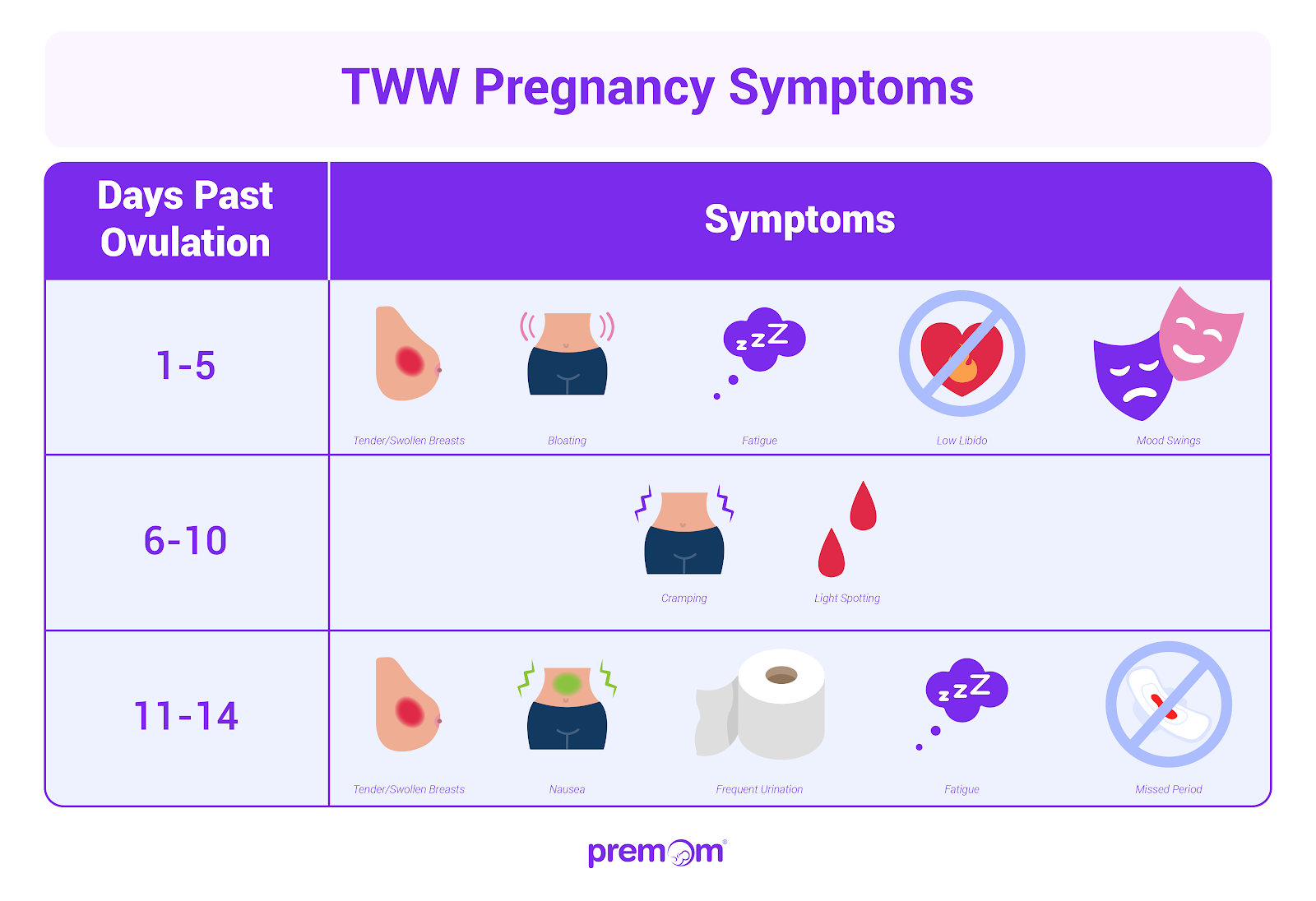
1-5 Days Past Ovulation (1-5 DPO Symptoms)
During this time, the fertilized egg starts its journey down the fallopian tubes and to the uterus where it finds a cozy spot to implant for the next nine months. Since implantation does not happen until about 6-10 days post ovulation, in these early days after ovulation any symptoms you have are likely related to the release of progesterone and not necessarily related to pregnancy just yet.
Common signs of high progesterone:
- Breast swelling or tenderness
- Bloating
- Fatigue
- Lower libido
- Mood swings
6-10 Days Past Ovulation (6-10 DPO Symptoms)
By this time, implantation should be happening! Not every woman experiences signs of implantation, and some have no idea that it is happening.
Two of the most common signs of implantation:
- Cramping
- Light spotting
Some women continue to experience fatigue, breast tenderness, and swelling, or mood swings. During this time, you may be eager to take a home pregnancy test, but it may still be too early for the pregnancy test to show positive.
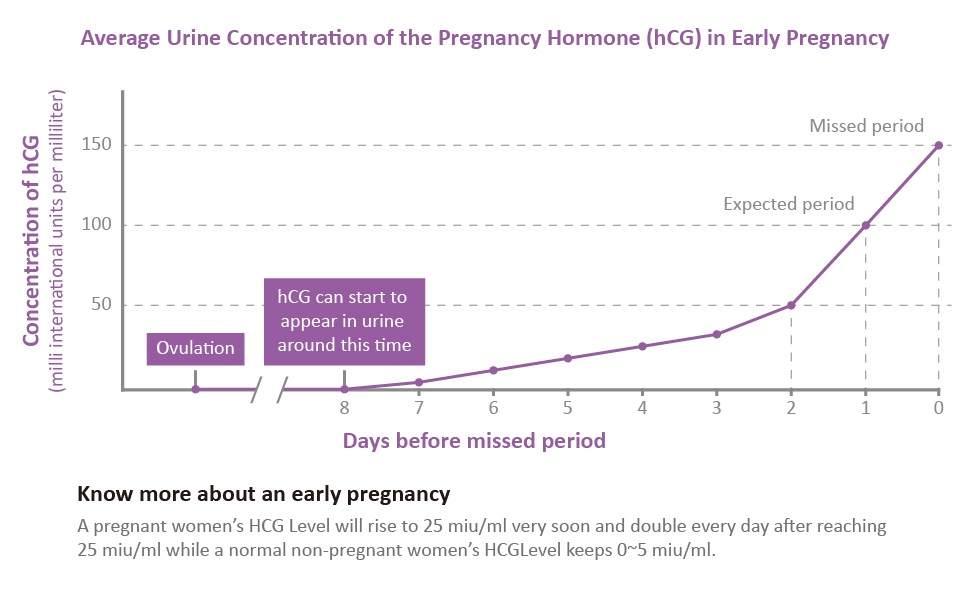
After implantation occurs, the pregnancy hormone, hCG, takes a few days to get high enough to show positive on an at-home pregnancy test. We recommend waiting to test until you are 12-14 days post-ovulation or on the first day of your missed period.
11-14 Days Past Ovulation (11-14 DPO Symptoms)
After implantation, the cells that become the placenta start to produce the pregnancy hormone, hCG, which creates symptoms very similar to what you feel right before the start of a new period, during PMS. A pregnant woman’s hCG level rises after getting pregnant and doubles every 2-3 days to reach the detection level of 25 mIU/mL.
Common early pregnancy symptoms:
- Tender swollen breasts
- Nausea or vomiting
- Increased urination
- Fatigue
- Missed period
No Two Week Wait Symptoms After Ovulation
Every woman and pregnancy is unique. It’s common to see a variety of pregnancy symptoms after ovulation as the body prepares for menstruation or to carry a baby, but the absence of symptoms does not mean you are not pregnant.
Some women experience pregnancy symptoms very early, while others may not feel any signs of pregnancy until the hCG hormone further increases during the first trimester.
The most accurate and reliable way to know if you are pregnant is to take an at-home pregnancy test.
When To Take a Pregnancy Test
You can take a pregnancy test as early as five days before your missed period, but you must understand how testing works so you can identify early pregnancy without compromising accuracy and reliability.
The best time to take a pregnancy test is after the two week wait, 14 days past ovulation, or on the first day of your missed period.
Why wait two weeks to test for pregnancy? Your hCG level needs to be high enough to be detected in your urine — and the longer you wait after implantation, the more accurate your results.
If you receive a negative pregnancy test, wait a few days before testing again as your hCG levels may not be high enough to be detected, giving you a false negative test result. If you see a positive pregnancy test, congratulations! Be sure to call your healthcare provider to set up a prenatal appointment to determine your pregnancy.
Luckily, many pregnancy tests are designed to be sensitive enough to detect hCG level increases in the very early stage of pregnancy. For example, Easy@Home pregnancy tests could show a positive result as early as five days before a missed period. Regardless of the test you use, always check the pregnancy test specifications before deciding when to test for pregnancy.
If you receive a negative pregnancy test, wait a few days before testing again as your hCG levels may not be high enough to be detected, giving you a false negative test result. If you see a positive pregnancy test, congratulations! Be sure to call your healthcare provider to set up a prenatal appointment to assess your pregnancy.
Is a Faint Line On a Pregnancy Test Considered Positive?
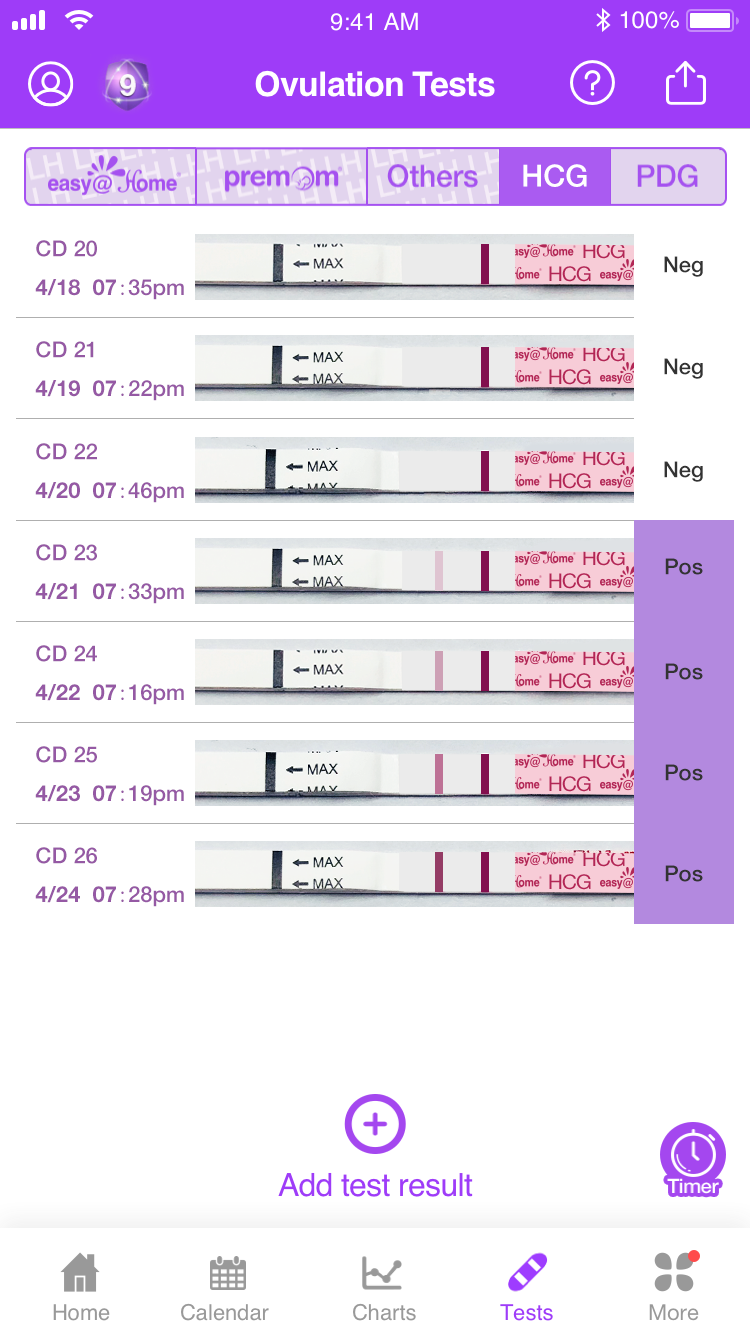
A pregnancy test shows a faint test line when you test early, and the line gets darker as hCG increases in the urine. So, the short answer is yes, even a very faint line on your pregnancy test could be a sign of pregnancy.
If you test for pregnancy early, be sure to test again after a couple of days to see if the test line continues to darken. This indicates pregnancy. You can see an example of this in the Premom app screenshot below.
Note that if you test multiple times, and the faint test line never darkens, it may be a sign of a chemical pregnancy.
Beyond an at-home pregnancy test, there are many different methods to indicate your pregnancy. This includes a blood test to examine your hCG level.
How To Take a Pregnancy Test
The key to an accurate result is to test for pregnancy the right way. With a dipstick home pregnancy test, you can find out if you’re pregnant in three easy steps:
- Dip the white absorbent tip of the test into the urine up to the black “MAX” line and keep the tip in the urine until the dye rises into the results window. (Estimated time for the Easy@Home brand is 5-10 seconds.)
- Wait 3-5 minutes after lying the test on a flat, dry, non-absorbent surface.
- Read the results: Two lines mean you’re pregnant and one line means you’re not pregnant.
BONUS: Use the Premom app
You can use the free Premom app to track your results and increase your chances of getting pregnant.
When you upload your hCG test result to the Premom pregnancy test gallery, you can track your hCG progression in your urine from a faint test line — from approximately 6 days before your missed period day — until a bold test line appears.
References
- Dix, M. (2019, July 17). Implantation signs and symptoms: Bleeding, cramps, and more. Healthline.
- Mayo Foundation for Medical Education and Research. (2021, December 3). Symptoms of pregnancy: What happens First. Mayo Clinic.
- Pugle, M. (2022, January 28). High progesterone: Signs, symptoms, and complications. Verywell Health.