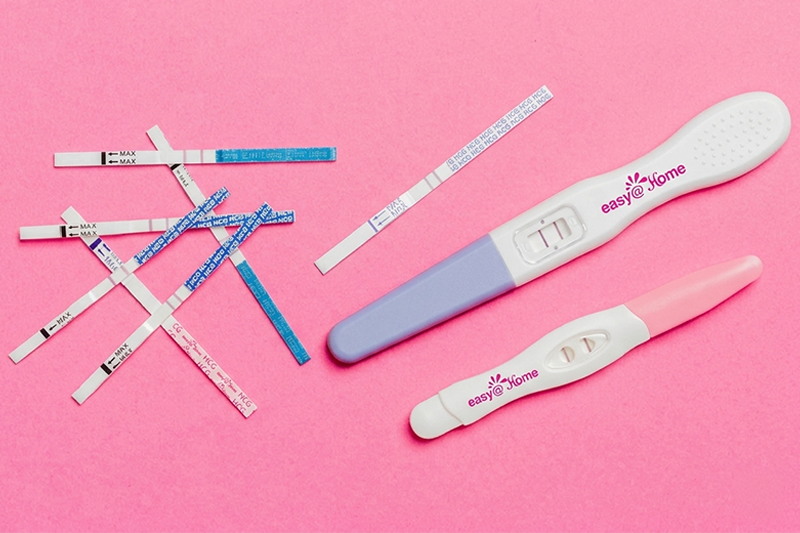
How to Use an Ovulation Test Kit? If you are trying to conceive, understanding ovulation is one of the most important steps. Ovulation is the time when the ovary releases an egg. This egg can live for about 12 to 24 hours. If sperm meets the egg during this time, pregnancy can occur.
Many women are not sure when ovulation happens in their cycle. These simple ovulation test kits can help you identify your most fertile days by detecting the luteinizing hormone (LH) change that happens just before the egg is released.
With an LH test or ovulation test strips, you can correctly use them to help you and your partner conceive by timing the right moment to have intercourse.
If you are new to trying to conceive, ovulation tests may feel confusing at first. Learning how to use an ovulation test kit correctly, what OPK kits do, and what your results mean.
What is an ovulation test or LH test, and how does it work?
An ovulation test, also called an LH test, is a urine test that helps predict ovulation. It detects a hormone called luteinizing hormone (LH) released by the pituitary gland in the brain that signals the ovary to release an egg.

During most of the menstrual cycle, LH levels stay low. As ovulation approaches, the body releases a sudden increase in LH. This rise is called the LH surge. The surge means LH is starting to rise. After this, the hormone continues to increase until it reaches its highest point, called the LH peak, and then it starts to fall.
After you see this peak, ovulation usually happens about 12 to 24 hours later. Since the egg lives only about 12 to 24 hours after it is released, identifying this time helps you catch the fertile window. If you are trying to get pregnant, you can have intercourse during this time to improve the chances of conception.
If you are trying to avoid pregnancy, avoiding intercourse during this window may help prevent pregnancy.
How does ovulation testing help when trying to conceive?
Pregnancy is most likely during the fertile window (about 4 days before ovulation and the day of ovulation). Sperm can survive in the female reproductive tract for up to 5 days, while the egg survives only about 12 to 24 hours after it is released. Because the egg lives for a short time, timing becomes important.
Ovulation tests predict the day of ovulation by detecting the LH hormone surge and peak. Ovulation usually occurs about 12 to 24 hours after the LH peak, helping you identify the most fertile time to have intercourse to get pregnant.
How to correctly use an ovulation test or LH kit step by step
Start testing at the right time
Begin testing after your period ends or at least 5 days before your expected ovulation day that the Premom app predicts. Starting early helps ensure that you do not miss your LH surge, especially if your cycle length varies.
Women with irregular cycles may benefit from testing daily after their period because ovulation may occur earlier or later than expected.
Test during the best time of day
The ideal time to take an ovulation test is between 10 AM and 8 PM, when LH levels are more likely to appear in urine in accurate measures.
Avoid using first morning urine, because LH is usually released in the early morning and may take several hours to appear in urine.
Collect and test the urine correctly
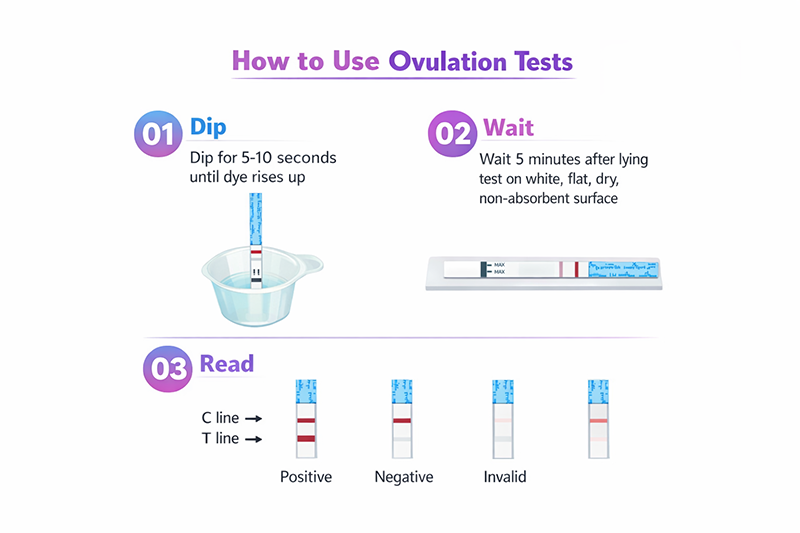
Follow the instructions provided with your ovulation test kit carefully. Start by collecting your urine in a clean, dry container. Hold the ovulation test strip and dip the white absorbent tip into the urine sample up to the marked “max” line. Do not dip the strip beyond this line.
Keep the strip in the urine for about 5 to 10 seconds, or until you see the dye beginning to move across the result window. Then remove the strip and place it flat on a clean, dry surface.
Within a short time, the liquid will move across the test area, and the control line (C) will appear, showing that the test is working correctly. The test line (T) will appear depending on your LH level.
For more accurate tracking, you can scan the strip using the Premom app, which reads the test line and helps track your LH progression and fertile window. Always read or scan the result within the time recommended in the instructions to ensure accurate interpretation.
Understand the test lines
Ovulation test strips show two lines in the result window. The test line (T) reflects the level of luteinizing hormone (LH) in your urine. The control line (C) confirms that the test is working correctly. Throughout your cycle, the test line will change in darkness as LH levels rise and fall.
A negative result appears when the test line is lighter than the control line, which means LH is still at a low level.
A positive result appears when the test line is as dark as or darker than the control line, indicating that LH is rising and ovulation may happen soon.
Keep testing to identify your LH peak
A positive ovulation test does not always mean ovulation will happen immediately. Instead, it shows that your LH surge has begun.
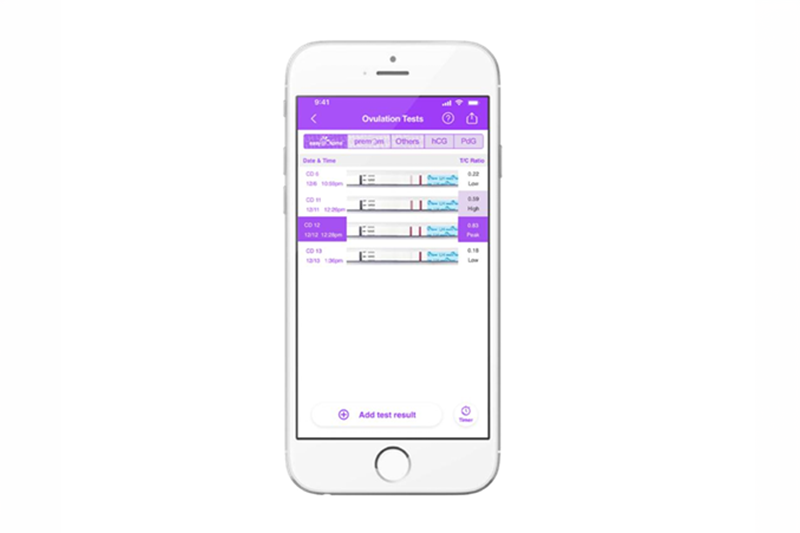
Qualitative ovulation tests (Easy@Home) interpret LH using the T/C ratio. A surge is typically seen when the ratio reaches around 0.8 to 1.0 or higher, meaning the test line is as dark as or darker than the control line. The darkest test line in the cycle is considered the LH peak, and testing should continue until the test line becomes lighter again, confirming the surge has passed.
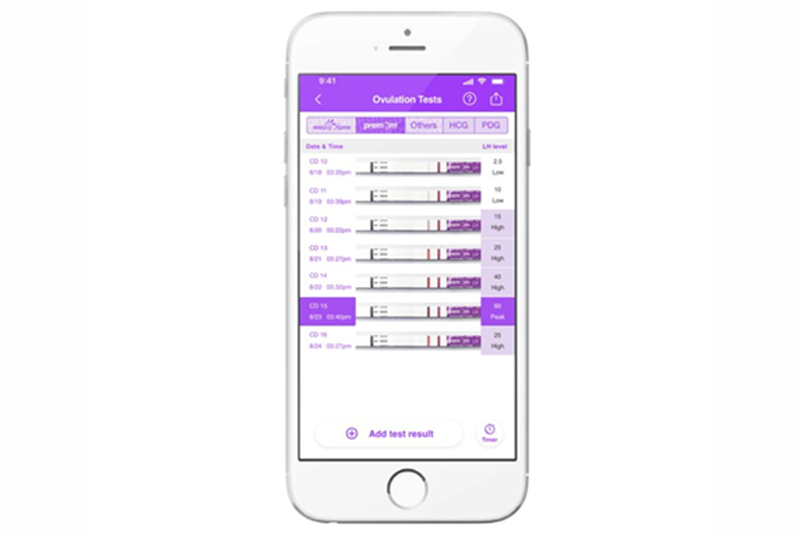
Quantitative ovulation tests in the Premom app estimate the actual LH hormone level, usually within a range of about 25 to 80 mIU/mL. The highest LH value recorded is considered the LH peak, and testing should continue until LH levels fall back down, confirming that the surge has ended.
Ovulation usually occurs about 24–36 hours after the LH peak, which helps identify the best time to try to conceive.
Test more frequently if needed
If you are new to ovulation testing, you may consider testing twice a day in your fertile window, the app predicts in purple based on your cycle data, to avoid missing a rapid LH surge. Some women experience a rapid LH surge, where LH rises within just a few hours. Others experience a gradual LH surge, where LH increases over several days.
Testing regularly helps you better understand your unique LH pattern.
Track your results with the Premom app
Tracking ovulation tests across several cycles helps you understand how your LH levels change each month.
With the Premom Ovulation Tracker app, you can simply scan your ovulation test strip using your phone’s camera. The app automatically reads the strip and records your LH progression as low, high, or peak fertility.
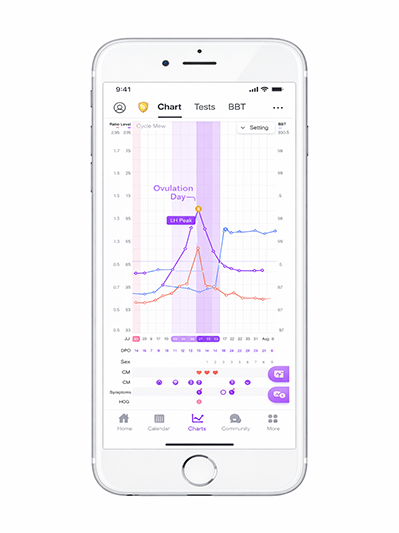
Your results are displayed in a chart view, allowing you to clearly see your LH rise, surge, and peak across the cycle.
Tracking ovulation tests together with basal body temperature (BBT), Cervical mucus changes, and cycle symptoms can provide deeper insights into your ovulation pattern.
Follow key testing tips
For the most accurate results, keep these testing tips in mind:
- test between 10 AM and 8 PM
- avoid using the first morning urine.
- avoid more water intake before testing.
- start testing before your predicted fertile window so you do not miss your LH surge.
- continue testing until you identify the darkest test line, which usually indicates your LH peak.
Ovulation tests are a useful tool to help you understand your cycle and identify your most fertile days. By testing consistently, observing LH progression, and identifying your LH peak, you can better time intercourse and increase your chances of pregnancy.
How to confirm ovulation
While ovulation test strips can predict when ovulation may occur, your body also shows other reproductive signs before and after ovulation.

Cervical mucus changes
As ovulation approaches, cervical mucus becomes clear, stretchy, and slippery. This type of mucus helps sperm move more easily toward the egg.

Basal body temperature (BBT)
Basal body temperature (BBT) usually rises slightly by about 0.5-1.0 degrees after ovulation due to the hormone progesterone. Recording your temperature every morning can help you understand that ovulation has likely occurred.
Ovulation tracking apps
Fertility tracking apps like Premom help record ovulation tests, cervical and other symptoms, and BBT temperature. Over time, these records can help you understand your cycle pattern better.
Ovulation test kits are simple tools that help you understand your fertility window. By learning when to test, how to read the results, and how to track your cycle, you can better identify your fertile days.
For someone who has never used ovulation kits before, starting with consistent testing and simple tracking can help you gradually understand your body’s ovulation pattern.
Download the Premom App.
Frequently asked questions (FAQ,s)
Ovulation tests are usually best taken between 10 in the morning and 8 in the evening, when LH levels are more likely to appear in urine.
Ovulation tests usually become positive shortly before ovulation. A positive result often means ovulation may happen within the next 24 to 36 hours.
Most ovulation strips are designed to be dipped into a urine sample collected in a container rather than urinating directly on the strip.
First morning urine is usually not recommended because LH may not yet appear in the urine early in the day.
Pregnancy is not guaranteed even if intercourse happens on the ovulation day. Many factors, such as egg quality, sperm health, and timing, affect the chances of conception.
LH levels can rise and fall quickly. Sometimes a surge may appear earlier in the day and decrease later.
Yes, ovulation tests can be used in the evening as long as they are taken within the recommended testing window.
Ovulation tests should usually be read within the recommended time mentioned in the instructions. Lines that appear much later may not be accurate.
Sometimes ovulation tests may show positive in early pregnancy because hCG is similar to luteinizing hormone. However, they are not designed to detect pregnancy. For accurate results, use a pregnancy test.
Ovulation tests detect luteinizing hormone.LH is responsible for triggering ovulation. Once LH rises sharply, the ovary releases a mature egg. Identifying this hormone surge helps you understand when ovulation is likely to occur.
Disclaimer
This content is for educational purposes only and is not medical advice. Please consult a healthcare professional for personalised guidance.